Most of us think of payroll as just a salary handling system at the end of the month. But in the UAE, it’s rarely that simple. UAE business owners already know there’s more to it, including compliance, rules, and government checks that no one can ignore.
You may have software that flawlessly manages all regular salary-related calculations, like allowances and deductions. However, the question is, can it comply with all the WPS (Wage Protection System) rules and calculate gratuity exactly as per the labour law, while maintaining every record intact?
Well, just forget about other solutions, Tally Prime UAE can excellently do that. It provides features to deal with every Middle East compliance and to avoid fines, penalties, and damaged reputation.
So, with the right setup and reliable tally partner, you can process salaries, generate WPS files, and calculate gratuity payouts.
The UAE federal Labor Law never leaves room for errors. It applies to both onshore businesses licensed by the DED (Department of Economic Development) and companies established in the UAE free zones. Here, compliance is expected for companies of all sizes; otherwise, legal issues and penalties may chase you and your profit.
Companies must clear their employee' wages within the required day mentioned in the employment contract. It’s mandatory to pay them within 15 days of the mentioned date, but in case there’s no specific date mentioned in the contract, then employees must be paid once every month.
Here’s another thing that can leave a solid impact on your payroll, and that’s leave.
Annual Leave: As per the UAE government, employees who have completed at least one year in an organization can get 30 days of paid leave in a year. And those who are there in the company for six months are eligible to get 2 paid leaves per month.
Sick Leave: In the UAE, the total amount of sick leave is 90 days, which includes both paid and unpaid. It initially starts with 15 days paid leave, half paid for the next 30 days, and for the additional 45 days, it’ll remain unpaid. Additionally, employees on their probation periods are not eligible to get paid sick leave.
Maternity and Parental Leave: The maternity leave varies across different Emirates in the UAE. Still, Article 19 of the Federal Decree Law No. 49 of 2022 says a permanent female employee is eligible to get 90 days of paid maternity leave. And as per Article 20, either mother or father is eligible to get 5 working days of paid paternal leave for the child.
Unpaid Leave: If the employee exceeds the paid leave days or they are not eligible for the same, then there’ll be a deduction from their salary, which’ll be calculated as per the number of their working days.
This is the most salient part of payroll that every UAE business must obey. In the UAE, it’s mandatory for businesses to provide Gratuity or end-of-service benefits to their employees once the contract ends. Employers need to calculate the amount according to the service length and the last basic salary of the employee. Also, this is not applicable to those employees who haven’t completed at least one year in the company.
The MOHRE (Ministry of Human Resources and Emiratisation) has introduced the UAE with an electronic system for salary transfer, called WPS (Wage Protection System), to ensure employees are getting their salaries accurately and on time. This system works with some approved banks, including the Central Bank of the UAE. Employers must comply with the entire process to avoid fines and penalties.
As an employer, you must follow these rules:
If you are non-compliant, then there are many penalties waiting. It includes fines, suspension of both new and existing work permits, and legal actions.
In this scenario, having reliable payroll software for WPS and Gratuity is a must, and here, Tally UAE can be your ultimate savior.
With Tally Cloud in place, employers can stay untroubled now. This system helps users to set up detailed employee profiles, map their salaries, and define the allowances or required deductions. Tally can efficiently generate SIF files in the format that UAE banks require.
What Businesses can expect:
Once payroll is processed, generating the WPS file is just another step.
Once you’ve defined employee data, joining date, basic salary, and end date, Tally can calculate gratuity automatically.
All calculations are tied to the basic salary component, which keeps them accurate and legally aligned.
Payroll directly integrates with your Tally accounting ledgers, and it makes compliance consistent every month. Here’s which companies get the most out of Tally.
So, it’s clearly visible now that Tally is efficient in handling WPS and gratuity in the UAE. Tally Prime provides you with everything, including SIF files to calculate the Gratuity amount on one platform.
Just add in Tally Renewal and you have a reliable system that simplifies payroll cycles month after month.
If you’re still managing salaries outside of Tally, maybe it’s time to put everything under one system and let Tally do the heavy lifting.
Tally Solution
For Saudi businesses, invoicing is rarely a one-language affair. In the Middle East, English may serve as the mainstay of global trade, but being the official language here, Arabic is deeply rooted in Saudi Arabia’s regulatory and cultural contexts. So, for invoices, VAT documentation, and official correspondence, both languages matter. If your accounting system can’t handle that reality and only produces invoices in one language, then it’s creating bottlenecks and limiting your business reach, which can put compliance at risk in the future.
Now Tally offers flexibility by design. But the prime strength of the platform lies in its ability to be customized. Users can easily adapt invoices, reports, and lots of features to reflect their operational reality using Tally Customization. Among the most common yet useful adaptations is the bilingual invoicing, where Arabic and English are both displayed together in a way that’s professional, accurate, and legally sound.
As mentioned, a vast part of Saudi Arabia speaks Arabic only, and that’s the key reason for using bilingual invoices. But this isn’t the only issue here. The regulatory part is straightforward, and Arabic is mandatory. But beyond regulations, it’s about professional clarity.
Your Emirati customers likely prefer Arabic documentation, while you are dealing with multiple international partners, auditors, and expatriate customers who depend on only English. If you’ve ever tried to reconcile payments with a partner who doesn’t speak Arabic, you know the back-and-forth emails it creates.
The same chaos happens in reverse when auditors or government officials receive invoices written only in English. Bilingual invoices immediately eliminate this tug of war. They help you stay compliant, avoid misunderstandings, and save your finance team from unnecessary translation tasks.
Customizing invoices is generally doable, but it comes with its challenges.
Fonts and Rendering: Arabic requires its proper Unicode fonts. Ignoring this often invites common issues like broken text or symbols on your invoices.
Layout and Alignment: Arabic layout requires right-to-left writing. If it gets mixed up with left-to-right script due to your generic software, it’ll make your invoices unreadable.
Data entry Consistency: Your staff needs to enter item names and ledger details correctly in both languages. Otherwise, one version can show up blank.
The good news is that you can handle all these issues with professional customization and proper testing.
Sometimes it’s not only about a bilingual invoice. The display language of your software, data entry, and printing, everything matters.
Change the Display Language: This Tally feature allows users to change the display language as they prefer. It’ll change every detail in Arabic along with the layout.
View & Print Invoices: It can even change your numbers in Arabic. With this feature, you are allowed to see and print your invoices in bilingual or Arabic without destroying the layout.
Data Entry Language: Tally Prime’s ability isn’t just limited to viewing invoices. You can now enter data in your preferred language. The best part? You don’t need to change the entire display for that; only the system keyboard is enough. You can easily start by installing the system keyboard and using it.
Doesn’t matter if you’re using Tally Cloud or not; you’ll require a valid license and a stable internet connection.
All you need here is the relevant dictionary. Just download it to view the display in Arabic. New users need to add their preferred language first to change the display language.
It’s not rocket science for users with a license. Whatever you use, Tally Single User or multi-user, is no big deal. Just download the relevant dictionary and opt for the language you want from the Tally Gateway, and your display will be changed. Remember, till now you can just read everything in Arabic. For typing, you need to download the keyboard.
And it’s done. Enjoy working in your language.
Till now, it was all about the licensed users. But there are plenty of people without the Tally Multi-user or single-user license. For them, the Tally educational mode is here.
They can seamlessly change the display to Arabic using the educational mode.
First things first. You must download the Arabic system keyboard for this. Though the language data-entry will automatically change once you select your display language (after you download the keyboard). Yet there is an option to change the data-entry language separately, even if your display language will remain the same.
Now you can both read and type all your essentials in Arabic.
Apart from just viewing and typing in Arabic, you can now print your invoices in the same language. The best part is that you can even print a bilingual report in the required format.
Remember, you are bridging two different worlds while customizing Tally Prime: Local compliance in Arabic and Global Communication in English. So are your invoices speaking the right language? If not, then it’s time to make it right. At the end of the day, your invoices are proof of your professionalism, and in Saudi Arabia, this means respecting both Arabic and English in the same space.

People often think that choosing accounting software is simply about keeping the books in order. Yes, bookkeeping does matter, but everything doesn’t end here; there’s more to value. You got the right software, meaning your daily business activities also become smoother while meeting the local tax laws, specifically in the UAE. If you run a business in the UAE, VAT rules and e-invoicing always keep you busy. Therefore, you need the best accounting software that seamlessly matches the law, saves time, and cuts mistakes.
Here, two names come up a lot: Tally and Xero. UAE businesses widely rely on both types of software because they help with bookkeeping and VAT. But they take different paths to reach compliance, and the question remains: which one suits your business better, and can software companies in the UAE really provide the best solution?
You’ve waited long enough to get the answers. Today we’re here to answer all of your queries. So without wasting time, let’s start.
The date was January 1, 2018, and UAE businesses started facing a 5% VAT. Since then, they must record the VAT on sales, track what they paid on purchase, and submit returns on time. This rule is applicable to all businesses whose annual supplies and imports exceed AED 375,000.
Apart from that, the UAE has recently announced the rollout of e-invoicing rules and integration expectations. This means that now you need to send invoices in a government-approved format. In this scenario, if your software doesn't meet the rules, you already risk fines or audits.
If you want a reliable tool that makes VAT simple for your UAE business, then Tally and Xero are your top picks.
Tally: Till now, you’ve probably heard of it. Initially, it started in India decades ago, and now it has a long history in regional accounting and is specifically made for small to mid-sized businesses. The latest version, TallyPrime, includes VAT modules, Arabic language support, and tools to produce tax-compliant invoices and returns in the UAE. This software aligns closely with FTA requirements and local business habits.
Xero: This one is cloud-based, which is ideal for small businesses. Xero is modern and easy to use with mobile access. Its strengths are more than 21,000 global bank collections, automation, and a clean user experience. It’s reliable because of the ability to seamlessly calculate VAT, produce the reports, and handle multi-currency transactions.
Now we know what Tally is. So it’s the perfect time to learn how exactly it helps with VAT.
VAT Capabilities in Tally:
So, Tally handles daily operations well. You can create invoices, track inventory, and view the ledger with ease. TallyPrime VAT features work alongside normal workflow, and that simplicity helps many business owners in Dubai stay compliant without extra steps. The only trick here is to find one of the best Software companies in Dubai that can help you understand all of the features while streamlining your workflow with TallyPrime.
Xero efficiently runs in your web browser while storing data in the cloud. This indicates that you can access everything from anywhere. Lots of small businesses love this software for its interface and mobile access.
VAT Capabilities in Xero:
All in all, Xero brings flexibility to your business. Your team can work together, see updates live, and generate reports anytime; that access helps you catch issues early. The only condition here is to choose the best Xero software provider in the UAE.
Still not sure about what to use between Tally & Xero? Well, here’s your answer.
Have a look at your priorities:
1. Do you want strong inventory control, local PC use, and hands-on updates?
2. Need remote team access, automatic updates, and a modern interface?
3. Do you need a local software consultant and Arabic readiness
4. Want to bring-your-own-device culture and prefer cloud freedom?
5. Are you concerned about version control and automatic compliance updates?
6. Do you prefer to own a license long-term and not pay monthly?
Here are some tips for you to choose between TallyPrime and Xero in the UAE for your business.
At the end of the day, both tools are solid for VAT compliance in the UAE. Tally gives you control, local familiarity, and offline work. On the other hand, Xero brings modern ease, cloud access, and low-touch updates. So, talk with the Software company in Dubai you prefer, and ask how they support setup, training, connectors with UAE banks, and VAT return filing.

Nowadays, the Middle East is becoming synonymous with Tax compliance. If you’re a business owner anywhere in the Middle East, then you already know that compliance and accounting are everything. In this complex situation, an accounting system can make or break your business flow.
There are numerous accounting software options available in the Middle East, but TallyPrime and Sage 50 are the two names that often confuse.
Alright, so, are you one of those who are trying to decide between TallyPrime and Sage 50 for your business? As mentioned, both names pop up often when someone asks around for accounting software.
Today we’re here for a solid reason: to help you choose between TallyPrime and Sage 50, along with one of the best software companies in the UAE.
Before directly jumping into a comparison, you must know the reason for choosing a reliable accounting software, specifically in the UAE. Well, running a business without good accounting software is kind of like trying to do everything manually in 2025. Things move very fast here, and clients expect reports quickly. And if that’s not enough, the Tax rules change frequently and always bring something new.
A decent accounting system should help you to:
So you see, the goal here is more than just recording data. It’s also about saving time, staying compliant, and growing your business smartly with some Software companies in Dubai.
Tally has been around for years. This is an Indian-developed accounting software. Small to large enterprises widely use this software across the world. In the Middle East, especially in the Middle East, Tally Prime has become a trusted choice for companies that prefer simplicity. It mainly works on desktops. But there are some versions available in the market that help you access things remotely. However, the interface isn’t very modern-looking, but people like it because it works well once you know your way around.
Sage 50, sometimes called Peachtree by older users, is a UK product. It includes a modern design and is also feature-friendly. This software is exclusively strong in managing finances, payroll, tax, inventory, and even multi-currency accounting. Created mainly for small to medium businesses, Sag 50 has a user-friendly yet modern interface that allows your team to manage everything seamlessly.
What to choose between Sage 50 and TallyPrime always depends on your setup. If you run a business here in the UAE, you will see clients from all types of industries. Some of them prefer speed and simplicity, while others may need depth and control. In this case, a reliable software company will always recommend a software depending on your business size, types, and how deep your accounting needs are.
Tally: If you’re someone who's used it before, you’ll be easily able to understand and access the screen with shortcut keys. The interface is user-friendly for those who already have some knowledge about accounting, especially in the UAE. But if you’re a completely new user, then it’ll take a bit of time, and you'll definitely need someone to guide you.
Sage 50: The interface here is a bit more modern and professional. People who opt for a professional-looking invoice may find Sage 50 easier for them. If you are from a non-accounting background and new to accounting software, then this is what you need.
There’s a difference between choosing accounting software in the UAE and choosing it for some other places. Because the rules here are diverse.
TallyPrime: Handles taxation including VAT, cost control analysis, bilingual & multicurrency support, security management, access reports on mobile, manages inventory, and provides payroll solutions. Overall, it covers the basics well and quickly.
Sage 50: It’s good at inventory management, UAE WPS compliance, customizing financial reports, handling multi-currency, security, and cloud accessibility.
Well, till now we all know that VAT and compliance are solid here.
Tally: It provides you with VAT reports that match what FTA needs. The best part is, you can now get bilingual POS and tax invoices in Arabic and English. Apart from that, users are able to manage domestic, intra-GCC, zero-rate supplies.
Sage 50: When it comes to VAT, Sage 50 is no less than TallyPrime. It helps you to stay FTA-ready by automatically calculating VAT and managing your report. Overall, a good Software provider in the UAE can help you use this software to simplify the tax process and minimize the risk of manual error.
People who are managing businesses in the Middle East already know how difficult it is to run the business with a local team and software that doesn’t support the native language.
Tally: Good news for Tally users! TallyPrime now supports Arabic language, which means you can create masters, record transactions, and print invoices in your native language too, along with English.
Sage 50: Here, Sage 50 stayed slightly behind. It doesn’t contain built-in Arabic language facilities. But you can still include the Arabic language by using third-party modules with the help of any trustworthy software company.
Tally: With Tally, it’s mostly like, you pay once and use it. There are perpetual licenses available for users that also offer 1 year of free TSS. Now it totally depends on you what you choose between a lifetime licence or the rental one for a limited time. However, the cost of TallyPrime silver starts from AED 2,340.
Sage 50: This software basically works on a yearly or monthly plan. So this is a subscription model. The more features you choose, the higher the cost will be.
Are you still confused about what to use for your business? Well, if you want a fast and reliable accounting software with proper VAT and language support, then Tally is best for you.
Simultaneously, if you run a small or medium-sized business that needs something that meets the market speed, offers cleaner reports, and grows with you, then Sage 50 is the one you need.
But the best way to choose between these two is to contact a software consultant in the UAE, i.e, Penieltech. They can help you choose the best one by understanding your business processes.

In business, some things stay constant no matter which industry you’re in. One of those is inventory. If you’ve got products moving in and out, keeping track of stock is more than a back-office task; it’s the line that connects sales, cash flow, and customer satisfaction.
Inventory, in reality, is both a backbone and a bottleneck. If handled correctly, it supports growth, but if not, it can silently drain your profits.
For years, businesses in the UAE, from small retailers to large distributors, have been struggling with stock management with spreadsheets, manual entries, and different software that rarely connect with each other. As a result, they get only errors, miscounts, and delayed decisions.
And in Dubai or across the UAE, where competition runs high and compliance is strict, the way you handle inventory directly impacts how efficiently you grow. That’s where tools like Tally Prime enter the picture. Not as another “accounting tool” but as Inventory Management Software: a business foundation that seamlessly blends accounting, compliance, and inventory into one single system.
If accounts show you the past, inventory tells you the present of your business. And unless the present is clear, the future doesn’t arrive the way you expect.
Every business that deals with stock faces similar issues, although at varying scales.
Now add multiple locations, warehouses, and suppliers to that scenario. Suddenly, you’re not just managing stock anymore, you’re firefighting. That’s why inventory management isn’t a “support activity.” It’s a survival system here.
For most people, Tally Prime is all about accounting ledgers and VAT returns. Fair enough, because that’s where Tally built its legacy. But now, Tally Prime UAE is more than an accounting software; it’s also a strong inventory management system that UAE businesses trust.
It connects accounts, stock, and compliance into one flow. So, here you get stock movement, valuation, and reporting, all under one umbrella.
Here’s where Tally Solutions quietly shines. It doesn’t overload you with multiple unnecessary features. It solves problems you actually face.
Businesses in Dubai often deal with thousands of items. From SKUs in retail to spare parts in distribution, it’s always endless. Now, Tally Software allows businesses to group, categorize, and track items. Instead of forcing everyone into one template, it bends around your business model.
Tally Prime lets you:
Imagine being able to see your entire stock by brand across multiple branches without lots of spreadsheets and manual grouping.
Manual tracking often causes delays. By the time you know you’re low on stock, your customers are already waiting.
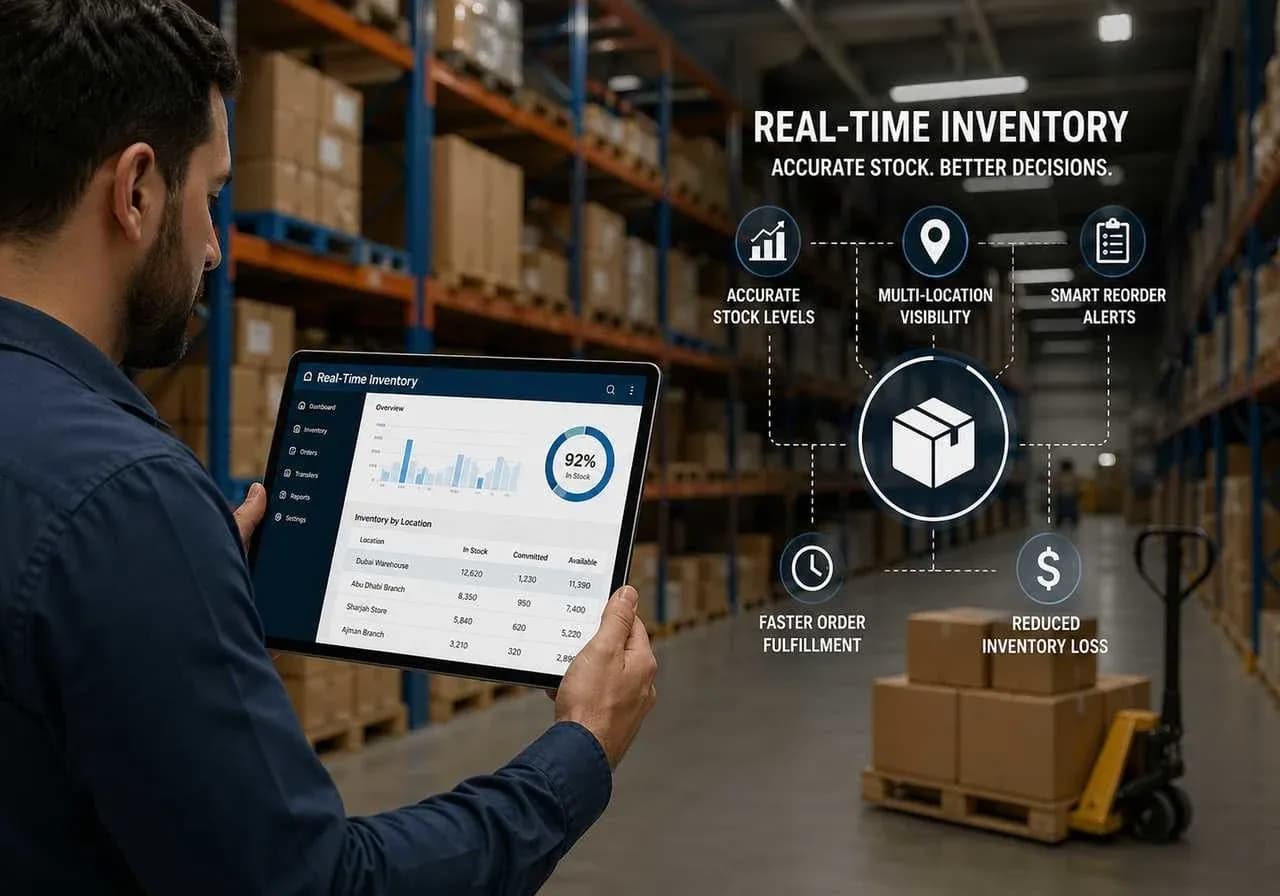
Tally UAE provides instant stock visibility across warehouses, stores, or even branches in different emirates and lets you know what’s in hand, what’s blocked, and what’s due for delivery. That way, stockouts or overstock situations can be avoided before they cause damage.
Distributors and wholesalers in the UAE don’t operate from one place. Their stocks move constantly through lots of warehouses, outlets, and stores. Tally Prime Inventory Management helps you manage all of it from one screen by streamlining stock transfers, warehouse tracking, and inter-branch movement, everything. Overall, it makes location-based tracking easier, while saving time and avoiding errors.
This feature is valuable, especially to businesses that are dealing with FMCG, food, or pharmaceuticals in the UAE. For them, inventory management is a legal requirement that makes the difference between profit and loss. It ensures you sell products in the right rotation (FIFO or LIFO) and stay compliant with the UAE’s safety and trade standards.
Businesses in Dubai value stock in several different ways. Some need FIFO, while others prefer LIFO or Weighted Average. Tally Inventory Management supports all common valuation methods and allows you to switch easily. This helps both in decision-making and in aligning with regulatory requirements.
Do you know what’s the most painful while running a business? Running out of stock at the wrong time. Tally Prime solves this by letting you:
This means you don’t need to catch up with shortages, because Tally always keeps you a step ahead.
This is where UAE businesses particularly benefit. Import-heavy companies often underestimate costs because they don’t track customs duty, freight, and logistics properly.
Tally ERP 9 adds these costs to the inventory value automatically. That way, when you sell, you’re not just looking at purchase price vs selling price, but the actual landed cost. It makes your profitability reports far more accurate.
So, how do all of the features help businesses? Here's your answer.
Software alone can never solve your problems. Implementation and the software provider also matter. That’s where Penieltech, a trusted Tally Gold partner, always supports businesses.
Here we:
Overall, we provide you with a system that actually fits the way your business runs.
So, in the UAE’s competitive market, losing control of inventory means losing everything. Tally Prime handles everything by providing instant visibility, smarter controls, and effortless integration with accounts and VAT.

In business, two words often get tossed around as if they mean the same thing: Inventory and Stock. At first glance, you also might think, “Well, aren’t they just the same?” In casual conversations, people do use them interchangeably. But if you’re running a company anywhere in the UAE, this difference isn’t just a matter of words. It affects the way to manage supply and stay compliant with local business regulations.
Initially, it seems harmless, but ultimately, it can influence your financial reports too.
So, let’s get into the difference between stock and inventory management.
Stock is basically the finished goods you sell. The products that are ready to leave your shelves and generate revenue.
Inventory is something different. It includes stock, yes, but also covers raw materials, parts, work-in-progress, and anything else your business holds to keep operations running.
Just think like this. You run a business in Dubai. Your stock is the clothes or electronics that are neatly packed and ready for customers to buy. But your inventory comprises the stock, spare packaging materials, and even the spare parts that are kept for warranty repairs.
In the UAE, the margins are always getting tighter. Just add every taxation into the mix, and suddenly you’ll realise that mismanaging “stock” vs. “inventory” becomes costly.
1. Financial Accuracy: Businesses always record Inventory and stock differently in their books. Inventory mainly affects production costs, warehouse value, and even depreciation, while stock is directly related to revenue. Mixing the two can misrepresent your profit margins or compliance reports.
2. Planning & Procurement: Inventory gives you the insight you need for ordering materials. Stock tells you what you can sell today. Understanding both helps you avoid overstocking, stockouts, or tying up cash unnecessarily.
3. Supply Chain Efficiency: Inventory management ensures you’ve got raw materials or spare parts available when you need them. Stock management ensures you’re ready for customer demand. Confusing the two disrupts both production flow and customer satisfaction.
For example:
Here’s the thing about stock:
Stock is much more defined; it’s what you hold specifically for sale to customers.
That means:
In short, stock is a subset of inventory and the goods your customer can immediately buy.
Inventory, on the other hand, includes:
Raw materials: Things like wood, metal, or fabric that are used to manufacture goods.
Work-in-progress (WIP): items that are partway through production.
Finished goods: products ready for sale.
Maintenance and operational supplies: Anything used in keeping operations running smoothly.
In short, inventory includes every item your business stores to serve its customers or keep the workflow going, even if those items aren’t for direct sale.
Manual tracking often blurs the line between stock and inventory. But the right Inventory management system always brings visibility. Most businesses in the UAE are moving to dedicated inventory software instead of manually handling spreadsheets.
Features that matter in the UAE:
Instant tracking: It lets you know exactly what you have in your warehouse and what’s on the way.
Automated reordering: You won’t run out of the best-selling items anymore with the reordering feature.
Compliance support: With VAT and corporate tax, you need precise records of both stock and other inventory.
Category: It will categorize everything, including what’s raw, what’s in progress, and what’s for sale.
Here’s how this software handles both stock and inventory:
For Stock:
For Inventory:
Overall, it helps users to handle multi-location warehouses across Dubai, Abu Dhabi, and the wider UAE.
Here’s the catch: businesses that confuse stock with inventory usually run into inefficiencies. Either they’re understocked, overstocked, or struggling with cash flow.
Understock: Your existing and potential customers will walk away being frustrated, and your competitors win.
Overstocked: In this situation, your cash is locked in unnecessary goods that’re not selling anymore.
Mismanaged Inventory: If you can’t manage your inventory, your projects may get delayed, production may halt, and customer trust may erode.
An Inventory management software in the UAE solves this by giving visibility across the board. From procurement to final sale, you can now see the full journey.
Why emphasize the UAE so much? Because the region has unique challenges:
High competition: UAE customers always expect good quality products fast. If you don’t maintain stock well, someone else will grab your sale.
Import-heavy market: Businesses heavily rely on shipments. So tracking only the stock can’t save you alone; you need to monitor the entire inventory cycle.
Now you know the difference between stock and inventory. Mixing the two up may not seem like a big deal, but with VAT and Corporate Tax becoming stricter, the difference between stock and inventory is a line every business must draw clearly.
At Penieltech, we’ve seen how businesses transform once they stop treating stock and inventory as the same thing. As an IT solution provider, we help them with refined inventory management systems to get clarity. And the clarity alone reduces wasted time and errors.

Manufacturing companies, E-commerce, and pharmaceuticals, if you run any of these businesses or are involved in import, export, and shipping, then you’re aware of the significance of having a well-maintained warehouse. Specifically in the UAE, that space is gold, and every square meter counts here..
If you see inside any warehouse in the UAE that’s been running for a few years, you’ll notice shelves full of dead or slow-moving stocks. Some items somehow ended up in the wrong place, and boxes may even need a crane to reach.
It’s not just a matter of tidying up. Poorly managed storage affects your speed, costs, and ultimately profits. Furthermore, in a fast, competitive, and high-service-driven market in the UAE, a sloppy warehouse can become your weakest link.
That’s why smart businesses here are turning to Inventory Management Software that is precisely designed for the realities of working in the Middle East.
The UAE isn’t just any simple country or another market. It’s a trading hub where daily lots of goods are coming in, going out, and passing through. That’s the reason “Jebel Ali” is considered one of the busiest ports in the World.
Lots of companies use the country as a base to reach customers in the Middle East, Africa, and parts of Europe and Asia.
Now, this level of activity creates both opportunity and pressure. Customers often expect fast delivery. So, retailers, suppliers, and logistics firms have to coordinate without delays, because slow service can push potential and existing customers to your competitor.
Apart from the geographic location, another factor matters deeply: Cost. Warehouse space in the UAE isn’t cheap, especially in prime logistics zones. If your storage is inefficient, then you’re paying premium rent for space that isn’t actually working for you.
Apart from these, the climate adds another layer. Extreme heat means certain goods need temperature control, which makes inefficient storage even more expensive.
Example – Dubai Retail Warehouse:
A retail distribution warehouse in Dubai optimized storage by:
Result: Costs reduced by 25% & efficiency improved by 35%
Always start with the basics: what’s in your warehouse and how often it moves. Lots of UAE businesses keep products in storage for months, sometimes for years, without realizing how much money that dead stock is eating up. With a good Inventory Management Solution, you can run reports that show exactly which items are selling fast and which are just collecting dust.
It’ll help you to:
The “why” is important here, too. If an item isn’t moving, then maybe the demand has dropped or it’s poorly placed in the warehouse.
Remember, every matter in your warehouse has a value; it doesn’t come for free. But in many places, layout decisions are made casually. Lots of people keep items where they fit, instead of where they make sense.
A proper warehouse map helps you to move goods logically from receiving to storage and then dispatch.
Here’s what the best layouts do:
A reliable Inventory Management Software can integrate with barcode scanning and location tracking, so your staff always know where something is, without running around to find it.
Overstocking or understocking is one of the biggest causes of warehouse inefficiency. Overstocking takes valuable space and wastes cash on goods you don’t need right now. At the same time, understocking leads to missed sales and lots of unhappy customers.
But the right Inventory Management Software helps you to:
This kind of proactive planning is what separates the warehouses that are constantly in crisis mode from the ones that are running constantly.
Warehousing isn’t something that you can just “set and forget”. In this field, product lines change and customer demand keeps changing continuously, and seasonal trends often affect how your goods move.
That’s why the UAE companies that are focused schedule regular reviews to check if their layout, stock levels, and processes are still valid. At this moment, the best Inventory Management Software really proves its worth. Now, you can pull up real-time reports, compare them with past performance, and spot problems before they cost you money with just a few clicks.
Plenty of software regularly promises to help with inventory. But in the UAE, where businesses deal with unique business challenges, you need something that’s been built with the UAE realities in mind.
At Penieltech, we provide the best inventory management software that’ll do more than just stock tracking. We offer a complete warehouse control system that helps you track all the items and handle other workflows with ease.

Though E-invoicing isn’t new to the Middle East, it's the latest in the UAE. You’ve probably heard a bit of buzz lately about the system. It’s one of the most significant changes to date in how companies handle their invoices.
The UAE Finance Ministry has kept its goal simple through the announcement of e-invoicing: make invoicing faster, accurate, and easier to track. As per the news, it’s mandatory for all B2G and B2B businesses to issue their invoices online using approved systems by July 2026. Moreover, the ministry has assured that the entire process of exchanging and submitting invoices will be safer by building the invoicing framework on the Peppol 5-corner model.
But for businesses, the process could be a bit trickier. It requires learning new rules, updating systems, and ensuring your team is ready to achieve the goal and stay compliant.
It’s been a while, and the UAE has been steadily modernizing its economy towards digital-first systems. Government portals, online license renewals, multiple smart city projects, everything is a part of this motive. Well, this e-invoicing is another step in that direction.
If you look around other countries in this region, like Saudi Arabia, you’ll know they already have their own e-invoicing systems.
E-Invoicing:
Besides, this entire process makes it harder for people to sabotage the tax rules. Overall, it’ll keep VAT collection smooth.
At the most basic level, e-invoicing means your invoices won’t be just a messy mix of PDFs, Excel files, and printed bills. You’re now moving into a single, clean, and digital format that everyone uses. Each invoice will be created, sent, and stored electronically in a structured format that software can read without any manual effort.
At this point, don’t mix up “electric invoices" with “scanned manual or PDF invoices”. The system works with actual structured data, usually in XML or similar formats. Apart from that, it’s compulsory for businesses to find a service provider that is officially FTA-approved and connected to the Peppol network.
The Peppol 5 corner network includes:
This is the certain invoice structure that businesses must follow.
So, now onwards, everything, including your VAT numbers to transaction amounts, will be clear and standardised. It’ll be easier for the FTA to validate and store the data.
The decision to move towards e-invoicing wasn’t made in a single day. It took years of discussion and hard work.
You can find all of the documents here:
Along with the technical changes, here’s what else you’ll actually see in your day-to-day work.
**Now you can not design your invoices as per your choice anymore because the content and structure need to strictly match the approved format of FTA, so it can be readable by systems.
**Now you don’t need to wait for weeks to submit an invoice. It’ll need to be reported to the FTA instantly or within a short window.
**As mentioned, the system won’t support paper files anymore. You need to store all invoices electronically for a number of years, as required by the FTA. This means you’ll need reliable digital storage with backups.
At first glance, just like other changes, this situation also comes with extra work, but in the long run, the benefits can be significant.
Here’s some good news: you don’t need to reinvent your whole process. What you need is to make it compatible.
We all know that the UAE’s e-invoicing system is a major step toward a fully digital business environment. Yes, it requires you and your team to learn some new processes at first. Ultimately, it’s a great opportunity for everyone to slowly leave the old inefficiencies behind. So don't waste any more time and start preparing now for the future.

The UAE is no stranger to change. In fact, change is often the reason its business environment stays ahead of other countries in the region. Over the years, the region has witnessed lots of changes towards the future, including paperless governmental portals, smart payment setups, and plenty of software that saves time for businesses. And now, there’s another feather added to the cap: E-VAT returns.
UAE companies that have been filing VAT since 2018, the current method simply works for them. But from July 2026, e-VAT returns will no longer be though. After that period, businesses will need to submit their VAT returns to the EmaraTax portal using their account software.
The new system is meant to make the whole process lighter with less manual work, quicker submission, and more accurate data.
At the moment, businesses file VAT monthly, and sometimes quarterly, depending on their tax period. Here's the process they follow.
Before anything gets filed, you need to gather your sales and purchase records for the required period.
The data include:
Some companies have neat ERP systems to keep that data. While others are still piecing things together from spreadsheets and files.
Then comes the part where accountants calculate:
This is the process where most companies slow down. Many of them hire accountants to get the VAT 201 form and check and reconcile the numbers to avoid costly errors. There are some more businesses that do these things manually.
Once you fill out the form and are confident that the return is accurate, it’s time to submit it online and make the payment through the EmaraTax portal.
Even after filing, taxpayers need to keep all those records intact for at least five years.
The idea behind e-VAT returns is pretty straightforward. The key agenda here is to remove as much manual work as possible.
Instead of your team gathering and re-entering the data itself, your system will work directly with the FTA's system.
Either your accounting or ERP software will directly connect to the FTA’s platform. The software will send the VAT-related data electronically in the right format.
As per the new system, the software will automatically flag any missing or mismatched numbers or data before you submit it.
With the data already there, you just need to review it, confirm if it's correct, and submit. So previously, what needed days can be done within minutes.
Now you don’t need to wait, because you’ll get an instant digital acknowledgement right after filing your return.
Your past returns stay stored online in a clear, easy-to-access format. If you need them anytime for an audit or something else, you can easily access them.
The digital move to e-VAT return isn’t just beneficial for FTA: it’s fruitful for businesses too.
This digitization was never about just making the tax easier. It’s another big step towards the UAE’s vision of a fully digital economy. The less time your team spends on admin work, the more they can contribute to growing your business. For investors, it’s proof that the country is serious about keeping the business environment efficient.
There’s no issue in the current VAT process, but it takes lots of time and effort, while the e-VAT return system makes compliance simpler and encourages growth.

A few years back, in 2018, when VAT arrived in the UAE for the first time, lots of businesses were caught off guard. No, it didn’t happen because of the taxation. The reason was the way it was implemented. In that moment, it required an entirely new approach to record-keeping, invoicing, and compliance.
This is 2025, and it’s been 7 years. Well, the landscape switched again. Nothing happened with the tax rate. It remains the same, but the way to handle the taxation has changed.
This change has a name: EmaraTax: The online tax platform of FTA (Federal Tax Authority). As per EmaraTax, the days of struggling with paperwork and manual visits are gone. Now, businesses can handle almost everything online without a delay because of the faster and more transparent process of the FTA.
EmaraTax: We can think of this platform as the UAE’s central online office for tax matters. Besides VAT, this platform is built for almost every interaction you’ll have with the FTA. The key purpose behind this decision was to manage taxes and everything in one place without unnecessary delays.
Here, what it does:
Apart from all of these, EmaraTax seamlessly integrates with other official systems, including the UAE Central Bank, UAE Pass, and the Ministry of Finance.
EmaraTax isn’t a normal online service. It’s now the main channel for VAT in the UAE. Every VAT-registered company is required to use it to manage its tax responsibilities in the UAE.
Besides, EmaraTax’s deadline reminders, alerts, and guidance are there to help you. So you can stay compliant without using too much manual effort.
From now on, there’s no need to stress about payments with multiple options. If you want to go online, then eDebit is there. For others, Giban bank transfer and MagnatiPay card payments are also available.
GIBAN Reference Numbers: This is a unique payment reference for each taxpayer. So your funds go straight to the right account without delays.
MagnatiPay: This new payment gateway supports cards and digital payment options to stay compliant with EmaraTax and the FTA.
Don’t worry, the complexity isn’t here at all. On the contrary, the system itself guides you through each step, from login to payment.
Get the Access: If you are already an existing user, then just log in with your registered email and password, or use UAE Pass to do so. Here you can see the dashboard with upcoming actions, key dates, and relevant updates.
VAT Registrations: For new businesses, it’s a little bit different. Firstly, you need to register for VAT online, following the instructions there.
Filing VAT Returns: You can directly file VAT returns in the portal or upload them as a pre-completed Excel file.
Refunds: Users can now directly submit their refund applications through the portal. They can also track the progress without any follow-up calls.
Do you know what’s the most noticeable improvement here? It is how quickly you can move step by step without jumping between multiple unnecessary tabs.
So, EmaraTax proved itself essential by merging VAT registration, filing, payments, and compliance tracking into one system. Overall, this process reduces errors and stress while helping businesses stay compliant and focus on growth.

Businesses in Saudi Arabia are always on the move. New regulations, global partnerships, and ambitious visions like Vision 2030, all of it is pushing companies to modernise the way they generally work.
And in that rush to stay ahead, one tool is quietly making its way everywhere in the Kingdom. Customer Relationship Management Software, aka CRM, is taking the lead for multiple companies to manage their customers.
Using the best CRM software in Saudi Arabia means you get better customer tracking, faster service, sharper sales forecasting; in short, a smarter way to run your business. It sounds literally perfect.
Well, that’s true, but only if you get the right one and use it the proper way. Because implementing a CRM isn’t simple at all, especially in Saudi Enterprises. Here, local needs, compliance rules, and cultural nuance are all crucial challenges, and your CRM solution can’t go wrong with these.
But, similar to any other hurdle, this one can also be resolved. So without wasting any more time, let’s have a look at the common CRM implementation challenges and their solutions.
This is the ultimate truth. Lots of companies are willing to purchase the software because it boosts sales. But in reality, you can’t achieve anything without a clear target. If your team doesn’t know what they’re doing, the adoption rate will definitely drop, and the CRM you were once fascinated by will become a burden now.
Solution:
Once you set the target clearly, the choice of your CRM solution and the way your team uses it will become sharper.
This is one of the common problems in Saudi Arabia. People often go for the solutions that don’t even match their business size. For example, suppose a large enterprise purchases a CRM Software that’s made for small businesses, which can’t handle their workflow, or small startups are choosing an enterprise-level system with unnecessary features.
Solution:
So, always try a demo and see if it feels natural for your team before you commit.
Most Saudi businesses use multiple platforms, including accounting software, marketing tools, HRMS systems, and more. Now, imagine what if your CRM software can’t connect with any of them. Ultimately, your data gets stuck, and your team needs to manage everything manually.
Solution:
Work processes in every business are different. Even businesses from the same industry work differently. The same goes for the CRM systems. There are lots of industry-focused systems available that won’t work for other types of businesses. If you choose a CRM that forces you into its way of doing things, it can slow you down.
Solution:
The more it matches your workflow, the more your team will actually use it.
This is one of the common yet bigger issues Saudi businesses face. In demos, the Arabic version of the CRM may look good, but you can feel the gap after using it. You can notice misaligned fields, missing words in reports, and most saliently, it doesn’t support the right-to-left layout. Also, most of the CRM systems don't support dual-language records (Arabic + English) and Hijri & Gregorian date handling.
Solution:
The data protection law in Saudi Arabia is both clear and strict. That’s the ultimate reason for taking care of where your data is stored and how it’s backed up, because mishandling customer information can lead to fines and lost trust.
Solution:
If you are switching your systems, you’ll definitely face this. You’ll get lots of duplicate systems, wrong information, missing data, incomplete profiles, and inconsistent formats. If you move everything in the new system, then you’ll get the same mess but in shinier software.
Solution:
Finally, if possible, let your CRM provider or IT team handle the migration. That way, you can start with a clean slate.
When it’s done right, a Saudi company with a well-implemented CRM software sees:
Honestly, in Saudi enterprises, most of the CRM success relies on 70% people and 30% technology. So, if you manage the change well, the technology will follow you. But if you ignore the change part, even the best CRM software will flop. Do it in the right way and enjoy the competitive advantage of your CRM system.

UAE, Saudi Arabia, Qatar, Bahrain, or other Middle East countries: Businesses here never slow down even for a moment. Deals in these places are often shaped by trust, timing, and a lot of face-to-face conversation. Here, businesses can even start with a simple handshake over “Qahwa”, continue with messages, and close with a formal meeting a few days later. Overall, things run at speed, and customers expect quick responses no matter where you are.
In a place like the Middle East, where the rhythm is different, the stakes are higher, and expectations are different, your CRM software can’t be just a copy-paste from other regions. You need something unique that seems like it was specifically made for you. It should be flexible enough for small businesses, yet powerful enough for larger enterprises.
So, here’s the answer you came looking for: the 7 CRM system features that actually work for the Middle East.
Do you know what’s the quickest way to slow down your business in the Middle East? That’s language barriers and currency confusion, because this isn’t a one-language market.
Just assume your client, who is from Dubai, has replied to an email in Arabic, but some of your team members need that information in English. In this case, if your CRM can’t handle multiple languages on the same platform, you’re simply wasting your time and money on the wrong one. Only a CRM solution with multilingual support saves you from this issue.
And then, the same goes for currency. Suppose you’re quoting in AED, but your supplier invoices you in USD, while your report needs to show SAR for your Saudi branch. So, Dirham, Riyal, USD, whatever this is, you definitely don’t want to pull up a currency converter or do it manually every time you send a quote, which is slow and risky. The Best CRM Software in the Middle East seamlessly switches currencies and updates exchange rates instantly.
In the Middle East, business operations and deals don't wait for you to “get back to the office.” It can be done anywhere across or even outside of the Gulf. That’s why Cloud CRM is non-negotiable here. This feature helps your sales team to pull up client details, update deals, and log notes from anywhere, without calling the office, while logging in from their phones.
Yes, speed matters in the Middle East business world, but that doesn’t mean you can ignore customer relationships. Sometimes the sales cycles grow slowly, leading towards a long-term customer relationship. These types of deals are nurtured through multiple meetings, long discussions, and repeated check-ins.
A standard CRM might focus on numbers, but in these cases, you need a sales CRM that keeps every single record of the meetings that you had months ago. Ultimately, it helps you to win your customers' trust, and in the Middle East, trust is the real currency.
The countries in the Middle East are very specific about compliance. Data security is a key concern here. Here you must use a CRM software that can meet the local requirement rules like the PDPL in the UAE, Saudi Arabia, Oman, and other Middle East countries, DIFC, and ADGM laws.
If your CRM solution includes modules like data residency options, lawful cross-border transfers, role-based access control, and detailed audit logs, this means you can automatically comply with local privacy laws.
In some markets, sales processes are strict and linear. But here, they are often flexible and even unpredictable. Every business has its own way of doing things. A CRM should always fit your every process, not the other way around. CRM software that lets you customize workflows is worth its weight in gold. Custom workflow means you can easily add your own stages, set your own rules, and keep everyone moving in the same direction without sending endless emails.
Doesn’t really matter if you’re running a startup with fewer employees or a large enterprise with multiple teams; your data must be in one single place.
Here, customers never stick to one channel. They might email you a proposal request, follow up on WhatsApp, then call you to confirm. Ultimately, you may lose the leads or miss the messages. A CRM Software for small businesses or big enterprises can pull everything together. It helps you to sync your emails automatically, save call logs with notes, and log in to social media inquiries.
The best CRM software in the Middle East isn’t just a “sales tool”. It’s the central place where relationships, deals, and decisions come together. Without these seven features, you will miss your chances in the Middle East.
Get those right, and your CRM will become the place where every deal starts, relationships grow, and the opportunity is targeting you.

If you’ve been in sales here in the Middle East for a while, you already know that everything moves here too quickly. But one thing is prevalent everywhere in the world, and that’s “deals are built on personal trust”. Here, people prefer direct conversations through WhatsApp chats. It becomes the main tool for talking to customers, faster than email and more direct than normal phone calls, because your clients probably check it several times a day.
Now, here’s another thing. While WhatsApp, especially WhatsApp business accounts, makes interacting with customers easy, it can also create a small headache for sales tracking. In this process, important details stay locked inside your phone, away from the rest of the sales process. To make those chats or details visible to the rest of your team, you need to manually update your CRM. Otherwise, the lack of proper tracking can lead to missed follow-ups and lost opportunities. This is exactly why connecting WhatsApp with your CRM Software can completely change how your team works.
In the UAE, Saudi Arabia, Qatar, and other parts of the Middle East, WhatsApp has become a crucial part of daily business life. A customer can send you a message at any time, during office hours or even on weekends. They can ask for a quick price or share a note explaining exactly what they need. You might have noticed that it’s faster to answer a WhatsApp message than to write an email.
Here’s what you actually get:
We already discussed earlier why it is salient to link WhatsApp business accounts to a CRM system. Now it’s time to discuss what exactly that means.
There’s something called WhatsApp Business. This feature is mainly designed for small and medium-sized businesses. The interesting part about this feature is that it empowers businesses to engage with the active user base of WhatsApp (more than 2 billion users globally).
It’s undoubtedly useful, but the WhatsApp Business API is something else that opens the door for real businesses and larger enterprises that have better customer interaction volumes. The API version of WhatsApp Business can be directly integrated into your CRM solution.
Just visualize for some moments that you are seamlessly addressing customer queries, customers are getting instant updates, and you are even closing sales using WhatsApp. Besides that, all the details, including the customer’s name, contact details, meeting dates, notes, follow-up dates, and past orders, are visible in your sales CRM now.
In the Middle East market, where deals often take months to close, this central system allows the sales teams to stay on track.
In the Middle East, businesses are built and grown on personal attention. That’s where integration helps you, to provide this personal attention. Now you make fewer mistakes with faster replies and smoother handovers.
You cannot just choose a generic CRM system and expect it to be smoothly integrated with your WhatsApp. Different sizes of businesses need different CRM systems.
When you want to choose the best CRM Software for your sales team, check if:
It’s worth testing before you commit, because a bad integration is almost worse than none at all.
Choose Wisely: Pick the one that fits your sales style and supports proper WhatsApp integration. For example, if you run a startup, then go for a CRM for small businesses, and for larger enterprises, choose other options.
Get the API: This WhatsApp Business feature allows your CRM solution to send and receive messages to customers securely.
Import Contacts: Link your contact and entire WhatsApp data to the CRM system so incoming messages match the right profiles.
Train the Team: Show your entire team how to use this system daily.
So, if you want to make life and work processes easier for your sales team, keep your customers happier, and close deals faster, don’t let your WhatsApp chats live in isolation. Just link them to your CRM Software and enjoy the automation.

VAT: Just three letters that changed the way businesses in the GCC keep their books.
Most business owners in the UAE, Oman, or Saudi Arabia already know how important VAT compliance is. The rules here are so strict that even a tiny mistake in your accounts can cost fines or unnecessary trouble with the authorities.
Over the last few years, multiple companies in the region have turned to TallyPrime to avoid this complexity by automating their accounts, invoices, and taxes. But the main question that occurs from lots of new and potential users is simple: Can TallyPrime handle VAT in the UAE, Oman, and KSA with ease?
Two answers are there. The shortest one is: YES. But the longer answer is even more useful, because VAT rules in these countries are slightly different, and your software needs to be configured properly to meet local requirements. Well, Tally does that flawlessly.
Today, you’ll get to know exactly how Tally Cloud works with VAT in your country, so stay till the end.
The GCC countries share a basic VAT framework, but they don’t all play by the exact same rulebook.
So let’s see how VAT works in different places in the GCC at a glance:
Till now, the general concept of VAT is similar, but each country’s tax authority has its own rules for invoices, returns, and record keeping.
In the UAE, VAT is a steady 5%, but the Federal Tax Authority (FTA) has specific rules for VAT invoices, returns, and record-keeping.
What’s needed:
Tally Prime can:
Many UAE businesses, from Tally Single User licenses for small shops to Multi User setups for large trading companies, use Tally Prime UAE because it’s reliable and easy to adapt.
In Oman, VAT is newer than in other countries, but the rules are strict. The Oman Tax Authority expects businesses to file returns accurately and that too on time.
Oman’s VAT system is similar to the UAE’s but not identical. The OTAs’ reporting style is different, and they have their own list of exemptions.
Tally Prime helps by:
Omani companies also like Tally for its Tally Cloud access, which allows users to review VAT reports even when they’re not in the office.
KSA is the place where everything gets interesting. The Kingdom has some of the most advanced e-invoicing requirements in the GCC. The Zakat, Tax and Customs Authority (ZATCA) requires businesses to issue invoices in a specific digital format and store them securely.
They ask for:
Tally Prime supports:
If you operate your business from multiple locations in KSA, then use Tally Multi User so that all branches can issue VAT-compliant invoices under one connected system.
Well, it comes down to adaptability. Tally doesn’t force its users into a single way of working; instead, it bends to fit your business while still matching the requirements.
At the end, it’s time to answer the original question once again. Yes, Tally Prime is VAT-compliant in the UAE, Oman, and KSA. With the right setup, it actively makes compliance easier, and you get accurate invoices, clean records, and ready-to-submit returns without the last-minute scramble.

Abu Dhabi: Undoubtedly, it has a business-friendly environment because of its free zones and long-term visa. Yet people talk about some difficulties, like legal framework and government regulations, but they often ignore the foremost issue: Competition. This is the ultimate minus point of Abu Dhabi being business-friendly.
In this competitive market, only a CRM system can be your savior. If you’re running a business in Abu Dhabi, then most probably you’re already using a CRM solution or have heard others mention it. Various businesses here are using CRM these days to keep their customer details in one place, manage sales better, and follow up on time.
But do you know the most interesting thing about CRM software? Apart from just tech companies or big brands, some of the most active industries in Abu Dhabi are using CRM every day while enjoying the results.
Today, we’ll talk about those six industries in Abu Dhabi that are really conquering with the help of CRM software.
The real estate market in Abu Dhabi is way ahead of just expanding; it’s the center of attraction now. Population growth, economic diversification, and lots of government initiatives are fueling this surge, and it’s happening in both residential and commercial sectors.
In this combat situation, you may become the last in the list if just one listing, paperwork, follow-up, or call goes wrong.
Well, the Best CRM Software in Abu Dhabi can only save you here. Most real estate agencies are using CRM to:
It’s never about fancy tools. A reliable CRM solution is just a better way to manage people, leads, and deals. When things are more organized, you close deals faster, and your clients feel like you’re really paying attention.
The Abu Dhabi healthcare industry is prospering rapidly, and this growth is considerably contributing to the emirate’s GDP. Nowadays, Abu Dhabi has become one of the global leaders in healthcare services and innovation, which is rapidly attracting multiple research entities and international stakeholders.
With this progress comes chaos. That’s the reason why the best sales CRM becomes a necessity in this industry. This software is essential here for ensuring compliance and enhancing patient experience.
Most of the clinics and hospitals in Abu Dhabi are using it to:
Overall, the best CRM software in the Abu Dhabi healthcare industry helps you to communicate better and provides personalized care to improve patient satisfaction.
Education is the base of a better society, and this sector in Abu Dhabi is always empowered by the government here. Abu Dhabi is aiming towards a brighter future with a diversified economy and skilled workforce.
Now this cannot happen alone. Here, the education industry of Abu Dhabi is utilizing CRM systems to facilitate its operations and improve student engagement.
A reliable CRM helps them to:
At the end of the day, a CRM solution makes communication smoother, and parents notice that. Overall, it builds trust.
Higher per capita income, tourism, and population: these are the three factors behind the growth of Abu Dhabi’s retail industry. It is gradually attracting both local and international shoppers to the emirate. With that, the competition is also increasing because the market is rising with lots of physical retail shops and e-commerce platforms.
In this situation, having sales CRM software is a must for the retail industry in Abu Dhabi.
This system helps the shop owners to:
In this way, shop owners can fulfill their customers’ needs with ease. Apart from that, the business process automation helps them to stay ahead of the crowd in a competitive market like Abu Dhabi.
Abu Dhabi is a busy travel hub, and this sector is going through substantial growth. It’s mainly happening because of its amazing infrastructure, strategic investment, and rich culture. Tourists come here for luxury and relaxation.
Till now, everything looks fancy. But here comes the twist: travel businesses need to handle bookings, preferences, and follow-ups, at the same time, on a daily basis.
With a good CRM, travel agencies and tour planners can:
Beyond that, most hotels and resorts in Abu Dhabi are also using CRM to check past bookings and make guests feel special with a “Welcome back” message.
Banks, insurance providers, and financial advisors in Abu Dhabi deal with important data daily. They can never afford to lose track of even a single conversation or forget client details.
That’s why many of them are now relying on CRM systems, because these tools help financial firms to:
A CRM system in finance keeps everything clean and easy to access. So when a client calls back, the team doesn’t ask for their identity again and again”. Instead, they already know the person’s history, preferences, and needs.
This is the kind of attention that builds trust, which is a key in finance.
The industries we just talked about above are completely different from each other: There are no similarities at all, apart from the growth. Therefore, a CRM solution that works for one industry won’t do the same magic for another one. There are customized CRM software solutions available as per the needs of particular businesses.
So, to get the Best CRM Software in Abu Dhabi that supports your business, you must follow these:
Here’s a thing that people often ignore: You neither need the most expensive software nor the fanciest one out there.
Remember, a good CEM system not only keeps your data safe, but it also works smart and allows your team to stay in sync. Just look for the one that helps you to stay organized, respond quickly, and grow faster.

Operating a business means dealing with a lot of things at once, like customers, sales, records, team members, and more. Well, that’s common everywhere. What’s special about doing this in the Middle East, especially when your business is growing? Here, small details can make a big difference, and language is one of those details.
Let’s see how. Suppose you’re selling your products or services, and your team handles leads and customers every day. Now you’ve started using a CRM system to manage it all with ease, and that sounds great.
The issue starts from here. If your team and customers speak Arabic, then your CRM software should speak Arabic too. If it doesn’t, that can create a gap in your regular workflow, and trust me, with time it’ll only increase. That’s where a Sales CRM system with full Arabic language support becomes important.
We mainly know CRM as Customer Relationship Management. A CRM system helps your team manage all the interactions with customers. Now your team is able to know who the customers are, what they want, and when they first contact your business, from the initial sale to the final sale.
Let’s be more specific: a sales CRM is something that allows the salespeople to close deals by giving a clear view of leads, follow-ups, meetings, and quotes. Overall, it avoids confusion and makes your sales process smooth.
Now, just imagine you got a sales CRM which includes all of these helpful features, but in a language that your team isn’t fully comfortable with. To make the situation worse, it pretends to support Arabic but leaves half of the system untranslated. At this point, everything starts slowing down and ultimately leads to errors.
In most of the Middle Eastern countries, Arabic isn’t just a preference; it’s the first language. Yes, many people know English too, but it can’t replace the comfort and clarity that comes with using software in your native language.
Here’s what happens when your Sales CRM supports Arabic:
Better Communication Within the Team
Your sales team understands the system faster without any complaints. With the comfort of their native language, they make fewer mistakes, and it makes them feel more confident.
More Personal Customer Experience
If your CRM solutions help you to send messages, proposals, or reminders in Arabic, your customers feel more connected. They trust you more and feel that your business understands them.
Faster Onboarding and Training
This is the time when chaos starts. But if your CRM supports Arabic, then your new team members can learn how to use the software without extra translation help. This saves overall time and effort, and your business gets more value out of the software right from the start.
Fewer Errors in Data Entry
When your team has to switch back and forth between Arabic and English, it definitely leads to errors. Language mismatch often causes wrong spellings, missing details, or confusion in customer notes. Arabic support in your sales CRM removes that risk.
Compliance and Local Adaptation
Most regions in the Middle East have rules that require Arabic communication in documentation or reporting. An Arabic-supported CRM helps with that by providing built-in tools.
Lots of CRM Software for Small Businesses often claim to support Arabic, but most of them can’t do it right.
Here are a few things to check:
So, if you’re running a business in the Middle East, your CRM software needs to match the way you and your customers communicate. Because in business, language matters the most, and in your case, it’s “Arabic matters”.
A Sales CRM system with full Arabic support makes your team more productive, customers more loyal, and business more professional. Overall, it removes confusion, saves time, and helps you grow faster.
At the end of the day, just remember, never settle for half translations or broken layouts. Always make sure every part of the system works the way your team expects it to.