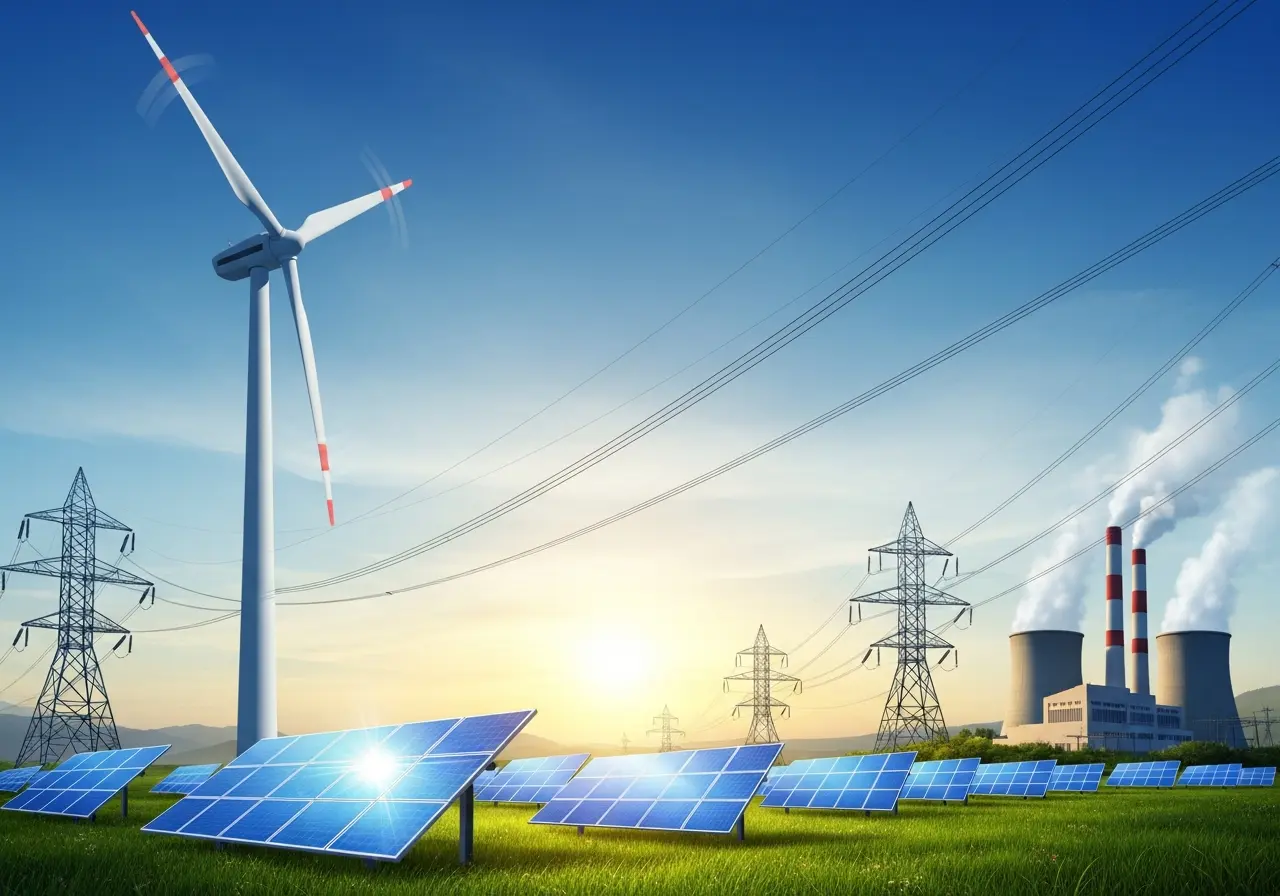
The UAE has already set its sights on transforming energy at scale with big solar parks, ambitious national targets, and a clear push to decarbonize while serving flourishing demand. That combination forces energy operators to act differently. When generation grows across solar, storage, and thermal plants, and demand patterns shift with electric vehicles and desalination, old IT setups start to crumble. Here, what’s needed is one ERP for power and energy companies that connects operations, finance, compliance, and the field so teams don’t just react to incidents, they learn to stop them. The country’s energy strategy and net-zero commitments mean the clock is ticking; the systems you choose today will shape whether you’ll be steering or catching up tomorrow.
The problem everyone recognizes but acts on unevenly
Utilities are asset-first businesses. That means:
Equipment may break at inconvenient times.
Spare parts may be stuck in warehouses or arrive too late.
Finance closes the books without accurate production insight.
Regulatory reporting becomes a scramble before audits.
Well, traditional ERPs can record events. But they are not able to connect those events into a living picture that predicts failures, pinpoints cost drivers, or recommends the next best action, like an Energy management software. In the UAE context, with ambitious sustainability targets and harsh operating conditions, that gap costs money and credibility.
What a modern ERP actually does for energy teams
Think of the UtilityERP system as the system of record that’s smart enough to be the system of action. For power and utility businesses, that means:
Linking asset health to finance so capex and maintenance decisions reflect reality.
Feeding live grid and meter data into forecasting models for accurate load planning.
Automating compliance trails so regulatory reporting is an ongoing process, not an audit emergency.
Scheduling crews and parts based on actual asset condition, not fixed calendars.
Operators in the UAE are already installing smart meters and grid automation to unlock exactly this kind of integration.
Industry-Ready ERP for Power & Energy
Manage generation, transmission, and distribution on a single platform. Get real-time control over assets, projects, finance, and operations built specifically for the power and energy sector.
Predictive maintenance becomes the rule
Reactive fixes are expensive. Simultaneously, time-based maintenance is wasteful. Today’s Cloud ERP for energy companies analyzes sensor streams such as vibration, temperature, and power draw against historical patterns and flags anomalies before something breaks. That reduces unplanned outages and optimizes spare-parts inventories. For utilities adopting smart grid and IoT programs, predictive maintenance has now become an operational expectation.
Improved forecasting and dispatch when ERP is the single source
Forecasting in energy is a tug-of-war between weather, demand behavior, and supply variability from renewables. When Power generation management software ingests weather feeds, meter data, and plant telemetry, forecasting becomes easier. That changes the way dispatchers plan, traders hedge, and finance teams project cash flow. Overall, unified forecasting means fewer surprises and smarter asset dispatch across thermal, solar, and storage fleets.
Compliance and sustainability
We all know that the UAE policy is continuously pushing for cleaner supply and tighter reporting. So, in this scenario, environmental metrics, safety incidents, and audit trails being available instantly means that for you, compliance stops being a reactive task. Rather, it turns into routine operations with emissions monitored continuously, reports generated automatically, and corrective actions tracked end-to-end. That level of transparency, using regulatory compliance software for energy sector, supports the country’s broader clean-energy targets and reduces the scramble before inspections.
Workforce readiness: fewer gaps & better matches
A skilled crew is always the backbone of any energy operator. Knowing that, intelligent and the Best ERP Software in the UAE always looks after certifications, aligns scheduled work with the right skill sets, and surfaces training needs ahead of time. This reduces risk on-site and improves first-time fix rates. For organizations spread across emirates and remote plants, intelligent scheduling and competence management turn logistical headaches into manageable routines.
Stay Compliant & Audit-Ready
Handle regulatory requirements, reporting, and financial compliance without manual work. The ERP keeps your business aligned with energy regulations and audit standards.
Renewable integration without chaos
Renewables bring variability; storage helps, but it also needs to be managed. Modern Maintenance management system for utilities ties generation forecasts and storage state into the same planning engine that handles conventional plants. As a result, you get smoother ramping, optimized storage dispatch, and consistent performance metrics across differing generation types. In short, renewables stop being a separate problem and become another asset class you manage intelligently.
Practical wins you’ll notice quickly
When Power distribution management software is implemented with industry focus, results also become tangible:
Shorter incident response times thanks to prioritized work orders.
Lower inventory cost because spares match wear-based needs.
Faster and more accurate regulatory submissions.
Better cash-flow visibility for long lifecycle projects.
The same capabilities are what large UAE operators are building toward as they digitize grids and deploy smart meters.
What to look for when choosing a platform
You need software related to Asset management for power plants, more than just a finance module. So, look for:
Deep asset-management and maintenance planning designed for utilities.
Instant integration with SCADA, meters, and IoT devices.
Forecasting that accepts weather and consumption feeds as inputs.
Built-in compliance workflows for emissions, safety, and audit trails.
Cloud-capable deployment for scalability, with strong data governance.
Also ask: Does the vendor support phased rollout and adoption programs? Because technology without change management stalls quickly.
A quick checklist for you
Map every data source: meters, SCADA, ERP, and asset sensors.
Identify three high-impact use cases (predictive maintenance, billing accuracy, compliance automation).
Pilot with one asset class or one region before full rollout.
Measure value: reduced downtime, faster close cycles, fewer compliance exceptions.
Build a user adoption plan that includes field crew input.
Improve Efficiency & Cut Operational Costs
Automate workflows, reduce downtime, and gain accurate insights across plants and sites. Make faster decisions with centralized data and performance dashboards.
You have two options. Keep treating ERP as paperwork, or make it the nervous system of your operation. When ERP connects field telemetry, workforce, compliance, and financials with an energy billing and accounting software into a single learning platform, your teams stop struggling and start shaping demand and supply. That’s the difference between running to keep up and controlling the pace of change.
Related Articles
Explore more insights, ideas, and practical knowledge from our latest writings.