How E-Invoicing Works in the UAE
The UAE follows the Peppol-based 5-corner model, where invoices move through accredited service providers before reaching the Federal Tax Authority (FTA).
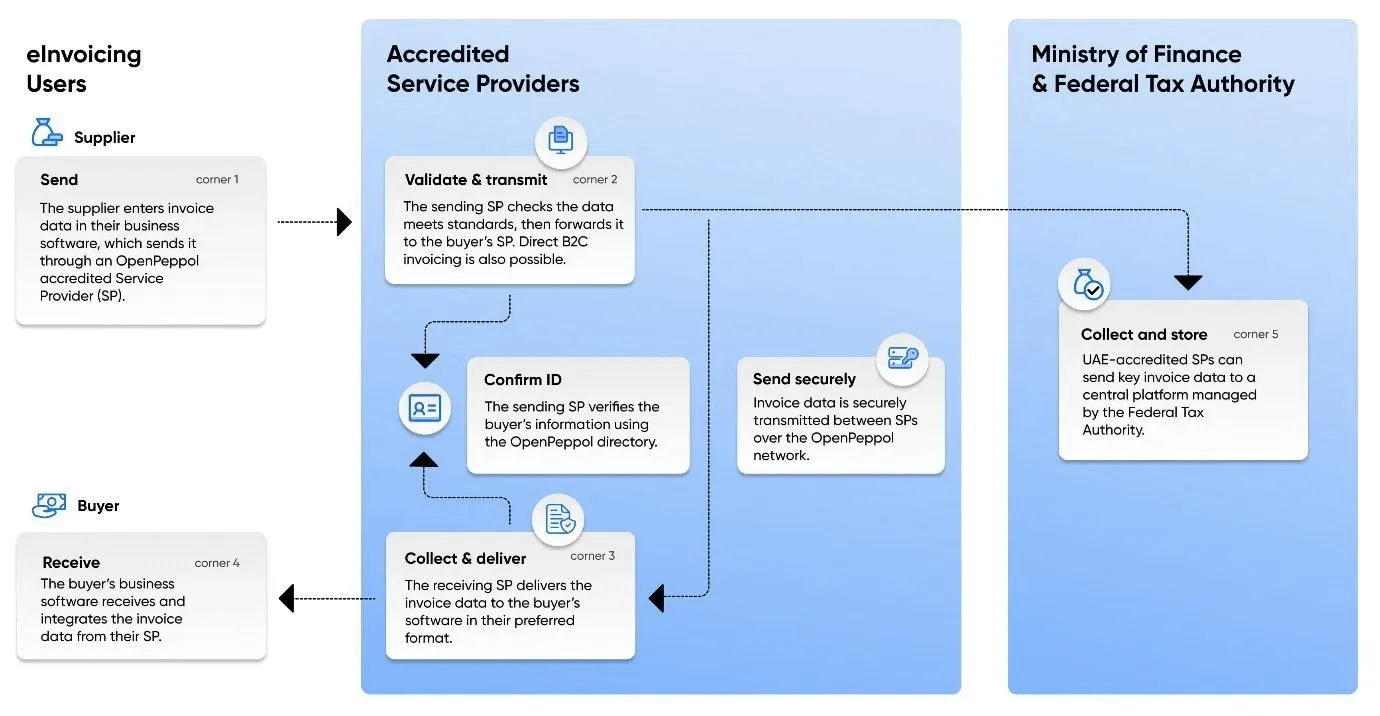
Image Source: Cleartax.com
Step-by-step process
The seller creates an invoice using ERP, accounting, or e-invoicing software. The invoice is generated in a structured digital format such as XML, not as a PDF.
The invoice is sent to an FTA-approved e-invoicing service provider. The provider validates mandatory fields like VAT details, TRN numbers, invoice number, and tax calculations.
Once validated, the invoice is securely transmitted to the buyer’s system through the Peppol network or delivered in a readable format if the buyer is not fully integrated.
Invoice data is automatically reported to the Federal Tax Authority. This allows the FTA to monitor VAT compliance in near real time.
The buyer receives the e-invoice digitally and can process it directly in their accounting or ERP system without manual data entry.
Key points businesses should know
- e-Invoices are digitally generated and machine-readable
- PDF or scanned invoices will not qualify as true e-invoices
- VAT compliance and audit readiness improve significantly
- Integration with ERP systems like Odoo, ERPNext, Tally, or SAP is common
- Businesses must use FTA-approved service providers
Benefits of e-Invoicing in the UAE
- Faster invoice processing and payments
- Reduced errors and manual work
- Better VAT compliance and transparency
- Lower risk of penalties during audits
- Improved record keeping and reporting