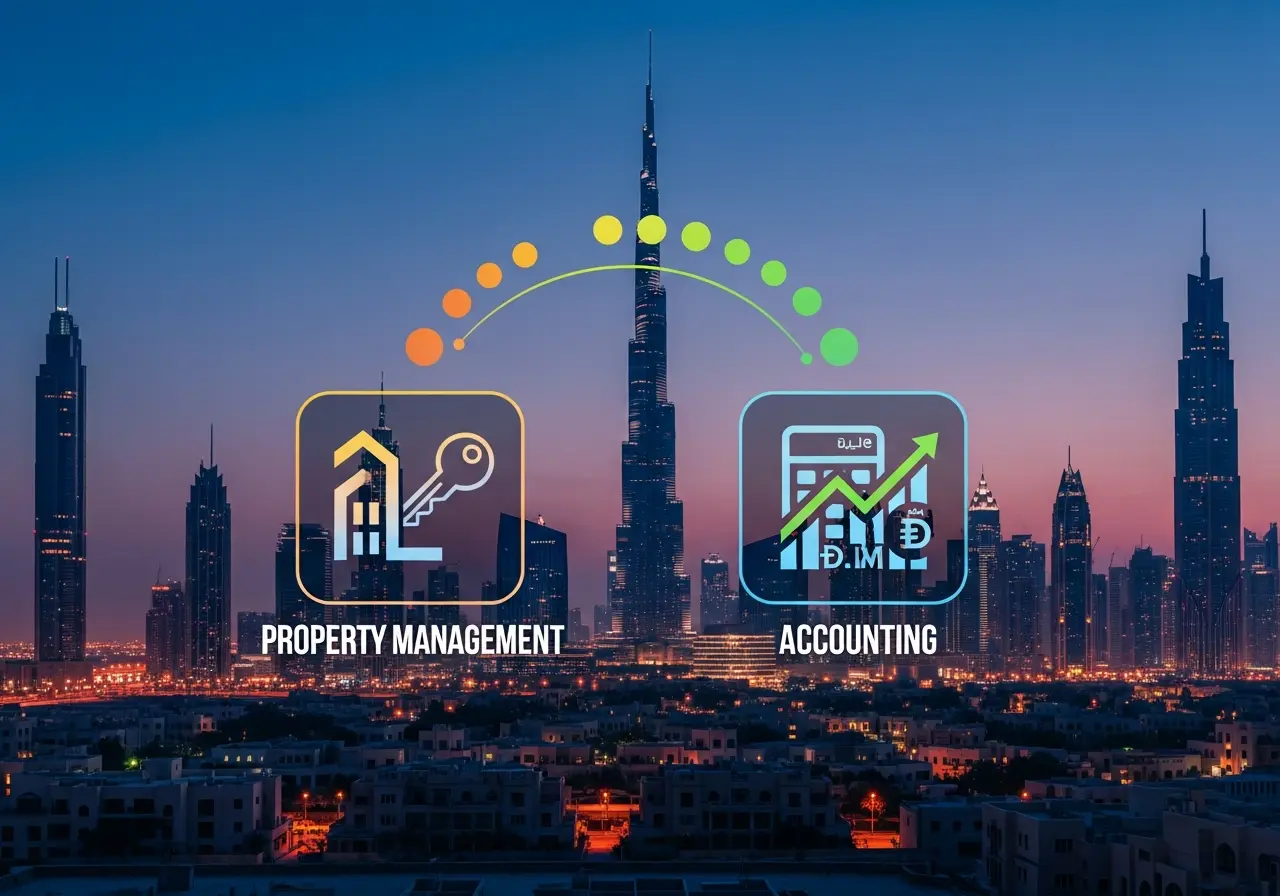
Can You Integrate Property Management Software with Accounting Tools in the UAE?
Morgan
Senior content writer
Tue Jan 20 2026
Get in touch with us
Yes, you can, but do it in the right way.
For most property management teams, accounting is nothing but an afterthought. Yet in the UAE, where VAT rules, owner reporting, and e-invoicing deadlines shape day-to-day operations, accounting isn’t a back-office chore. It's actually the nervous system of your business. Property software that can’t connect properly to your accounting stack creates rework, missed tax obligations, and owner friction. But we have good news for you. Modern property platforms built for the region and the major accounting tools used locally support integrations. Providers targeting the UAE real estate already advertise VAT-readyproperty management and accounting integration, designed for Dubai, Abu Dhabi, and beyond.
Where Property and Accounting Systems Usually Clash
Mainly, property management teams start with multiple systems to manage their several units, tenants, and contracts.
Accounting teams, on the other hand, rely on dedicated financial software to stay compliant with UAE regulations, VAT rules, and audit standards.
Now, the problems start to arise when these systems operate in isolation.
Over time, it creates friction between these departments. As a result, the finance teams won’t be able to trust the numbers. And simultaneously, the property management teams will feel slowed down. Leadership will lack a single and reliable view of performance.
This is where the need to integrate property software with accounting tools becomes unavoidable.
Centralized Financial Control
Automatically sync rent, service charges, expenses, and receipts from your property system to your accounting software. Reduce manual entry and keep your books clean and audit ready.
What a property management and accounting integration UAE actually delivers
The property operations suite is the place where transactions actually originate. On the other hand, the accounting system is where those transactions must be recorded according to financial rules.
So, a solid property accounting integration solution does the following for you:
Instant invoice and payment transfer: Rent invoices, receipts, partial payments, and refunds are posted to your ledger automatically so accounts receivable always stay current.
Correct VAT tagging: Vendor bills and service charges sync with the right VAT codes so input/output tax is recorded correctly from the start. This reduces reconciliation work and audit stress.
Owner and property segmentation: Income and expenses are allocated to the correct property and owner ledger, producing clear owner accounts without manual adjustments.
Bank reconciliation alignment: When bank feeds are enabled in the accounting tool, payments recorded by operations match bank entries faster, trimming reconciliation cycles.
Why UAE-specific features matter
The UAE isn’t a normal market. Here, developers handle escrow accounts, property managers need to cope with multi-entity ownership, and VAT registration hinges on concrete thresholds.
Escrow and project accounting: Due to Dubai’s tight rules, escrow accounts here need tight tracking of off-plan receipts and milestone releases. Only an integration of UAE accounting tools compatible with property management can tag and report escrow movements properly and keep project accounting compliant.
VAT thresholds and returns: As per the FTA rules, you need to pay VAT once your taxable supplies exceed AED 375,000 (voluntary registration starts from AED 187,500). Which means you can’t negotiate with correct tax coding and invoice traceability.
Multi-currency and multi-entity needs: Many UAE portfolios handle multiple currencies and legal entities. The right integration maps transactions correctly across entities, so consolidated reporting works without painful exports.
UAE VAT and Compliance Ready
Ensure VAT compliant invoicing, accurate tax reports, and smooth FTA submissions with real time data flow between property and accounting systems.
Practical integration points to insist on
All of the integrations can never deliver the exact same value. When evaluating vendors, make sure they support:
Two-way sync: You want to see statuses paid, partially paid, reversed, and reflected both ways, not just a one-off file dump. It’s only possible if your vendors properly sync real estate software with accounting systems.
Configurable mapping: Your chart of accounts, VAT codes, and owner accounting structure must map cleanly, and don’t let the tool force you to change your books.
Audit logs and invoice references: Every synced transaction must carry a reference back to the originating document and timestamp.
Bank feed compatibility: Automatic matching to bank statements reduces manual reconciliation.
e-invoicing data fields: As the UAE e-invoicing rules tighten, your systems must provide structured invoice data to compliant providers.
How to approach an integration project
Start with the rules: Document VAT codes, owner allocation rules, and any escrow/project requirements.
Map existing processes: Note where data originates, who approves it, and how it should flow to the ledger.
Pilot one property or owner group: Validate tax tagging, invoices, and reconciliations before rolling out.
Train teams and lock mappings: Finance should own account mappings, and simultaneously, operations should own invoice accuracy at source.
Monitor and refine: Use the audit logs to catch edge cases like manual reversals or multi-part payments.
Remember, Real Estate Management softwareand accounting system integration isn’t a substitute for process discipline. If you create invoices incorrectly, integration simply moves bad data faster.
Faster Reporting, Better Decisions
Generate profit and loss reports, owner statements, and cash flow insights instantly without switching tools or exporting data.
So, yes, you can integrate property management software with UAE accounting tools, and you should. But, make sure all the source processes are clean before syncing to accounting.
Related Articles
Explore more insights, ideas, and practical knowledge from our latest writings.