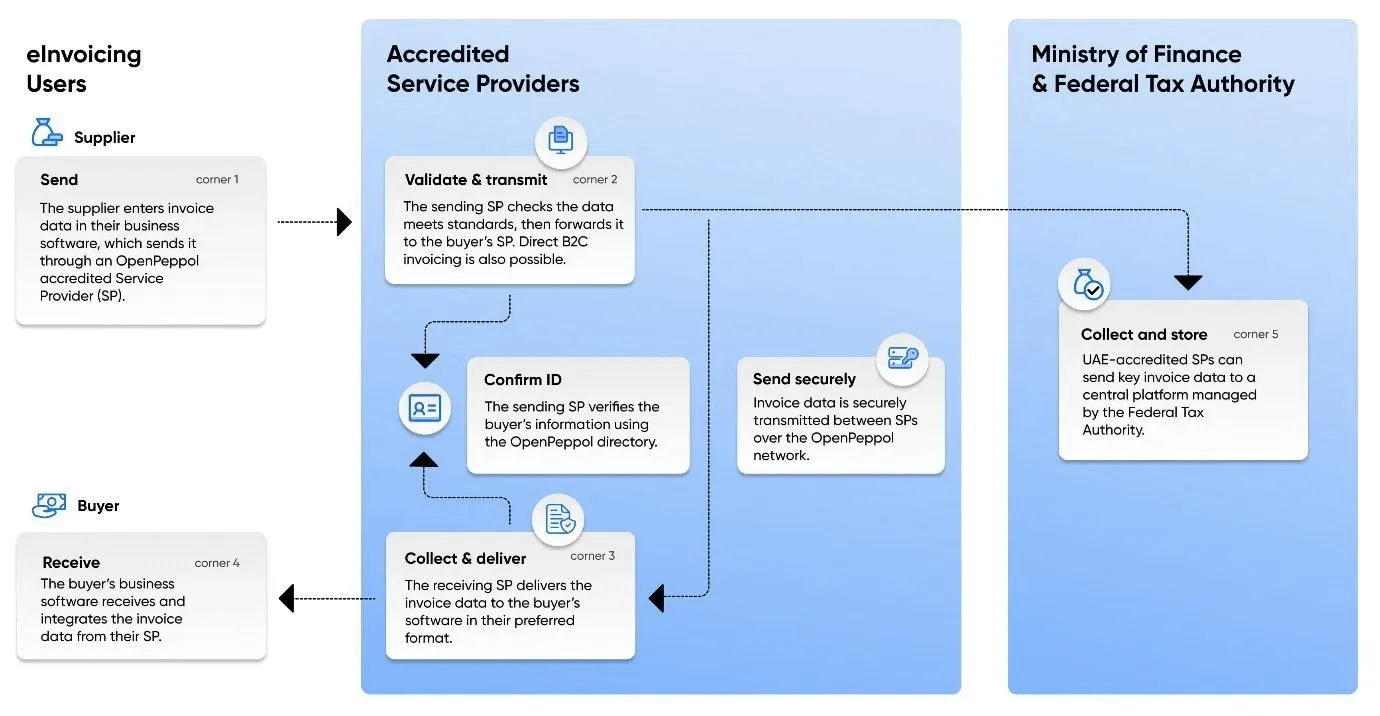
The UAE follows the Peppol-based 5-corner model, where invoices move through accredited service providers before reaching the Federal Tax Authority (FTA).
Image Source: Cleartax.com
Step-by-step process
- Invoice creation
The seller creates an invoice using ERP, accounting, or e-invoicing software. The invoice is generated in a structured digital format such as XML, not as a PDF.
- Validation by accredited service provider (ASP)
The invoice is sent to an FTA-approved e-invoicing service provider. The provider validates mandatory fields like VAT details, TRN numbers, invoice number, and tax calculations.
- Secure invoice exchange
Once validated, the invoice is securely transmitted to the buyer’s system through the Peppol network or delivered in a readable format if the buyer is not fully integrated.
- Real-time reporting to FTA
Invoice data is automatically reported to the Federal Tax Authority. This allows the FTA to monitor VAT compliance in near real time.
- Buyer receipt and processing
The buyer receives the e-invoice digitally and can process it directly in their accounting or ERP system without manual data entry.
Key points businesses should know
- e-Invoices are digitally generated and machine-readable
- PDF or scanned invoices will not qualify as true e-invoices
- VAT compliance and audit readiness improve significantly
- Integration with ERP systems like Odoo, ERPNext, Tally, or SAP is common
- Businesses must use FTA-approved service providers
Benefits of e-Invoicing in the UAE
- Faster invoice processing and payments
- Reduced errors and manual work
- Better VAT compliance and transparency
- Lower risk of penalties during audits
- Improved record keeping and reporting