There is a certain kind of small-business chaos that people pretend is normal for too long.
Your sales stay in one place, and inventory somewhere else. Accounts depend on disconnected software, WhatsApp screenshots, and spreadsheets. Then the month-end comes around, and suddenly a “small” problem leads to multiple late nights and arguments.
That is usually the point where business owners start asking about ERP. And when it comes to ERP systems, ERPNext is the name that comes first.
Now the question is if ERPNext is actually good for a small business in the UAE in 2026 or not. Yes, for many small businesses, it is. ERPNext is a strong fit when a business has outgrown basic accounting tools, needs operations and finance connected in one system, and wants something more flexible than an outdated ERP. It comes with core modules for accounting, procurement, sales, CRM, stock, manufacturing, projects, and POS, and it also supports UAE-specific requirements such as VAT workflows and the VAT 201 report. It is open source, multi-currency capable, and actively evolving.
What small businesses in the UAE quietly struggle with
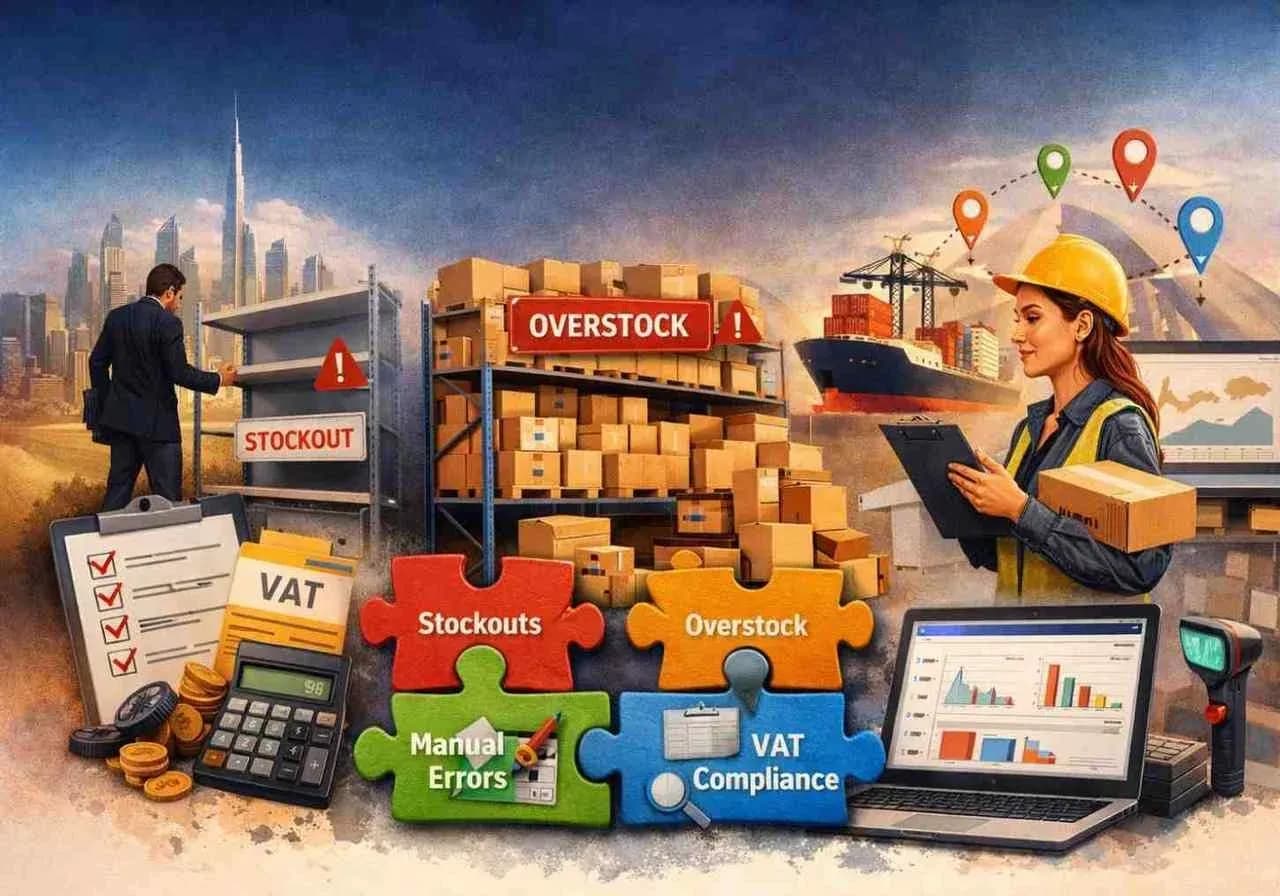
Most small businesses here don’t break because of one big problem. It’s a collection of small things that keep getting postponed.
VAT is one of them. Not because it’s complicated on paper, but because the data behind it is messy. And when it’s time to file, everything suddenly becomes urgent.
Then there’s multi-currency. It sounds manageable until you have a few suppliers in different countries, exchange rates shifting, and someone trying to reconcile it manually at the end of the month.
Inventory is another quiet issue. What the system shows and what is actually in the warehouse rarely match perfectly.
And then there’s the human layer. A lot of processes depend on one person knowing how things work. If they’re not around, things can slow down.
How ERPNext actually solves these problems
ERPNext doesn’t come in and “fix everything” overnight. What it does is remove the gaps where most of these problems start.
VAT becomes less stressful because the data is already structured inside the software. Sales, purchases, and expenses are recorded in the same system, in the same format.
The system handles exchange rates and keeps records consistent, so you’re not relying on manual calculations or last-minute adjustments.
Inventory starts behaving more predictably, closer to reality. Because every sale, purchase, or transfer updates stock instantly. The small mismatches reduce, and the bigger surprises almost disappear.
Instead of depending on people to remember processes, the system carries everything.
That changes how a business feels day to day.
ERPNext is also open source. It usually means more flexibility, less dependency on rigid licensing logic, and better room for customization when the business has one annoying process that refuses to fit inside standard software.
That flexibility is especially useful in the UAE, where businesses often operate in practical and slightly improvised ways. ERPNext handles any kind of issues better than many systems that look polished in demos but become stiff once real-life operations show up.
The UAE angle that matters
A small business in the UAE does not just need software that looks clean. It needs software that respects how businesses actually run here.
In the UAE, VAT is not something that you can ignore. Multi-currency is common, and IFRS-aligned accounting expectations matter. Regional fields and reporting are not some common features buried in a future roadmap. They need to work. ERPNext includes UAE-specific support, including VAT implementation for UAE/KSA, UAE regional fields, and UAE VAT 201 reporting.
Get Free ERPNext Consultation
Not sure if ERPNext is the right fit for your business? Talk to our experts and get a personalized consultation based on your business needs, industry, and budget.
Where ERPNext is a very good fit
ERPNext tends to work especially well for small businesses that already feel operational pressure.
Trading businesses
If a business buys, sells, tracks stock, manages suppliers, and needs cleaner control over margins, ERPNext starts making immediate sense there. Trading companies usually reach the pain point early because inventory mistakes are expensive for them.
Retail businesses
POS, stock control, purchasing, and accounting working together is a bigger deal than most retailers realize. Until they spend half a day figuring out why the stock number on paper does not match what the system says. ERPNext can save them by providing every detail they need.
Small manufacturers
ERPNext already includes manufacturing-related capabilities, and the latest version added improvements like purchase expense booking and automatic closing stock posting, which help with cost visibility and inventory accuracy.
The implementation decides everything
This is where many ERP projects go wrong, at the setup level.
ERPNext can be a very good system and still become a frustrating experience if implementation is rushed, over-customized, or handed to the wrong partner.
A small business does not need someone who just installs modules and disappears. It needs someone who understands how UAE businesses actually function, what needs to be standardized, what can stay simple, and what should not be customized just because it is technically possible.
That is where the implementation partner matters a lot. At Penieltech, we are an official ERPNext partner in Dubai/UAE and offer implementation and customization services around the software.
What small businesses usually get wrong before choosing ERP
It’s true that some businesses compare systems like they are buying a phone by comparing the feature list, price, a demo, and maybe a free trial.
Then months later, the cheaper option becomes the expensive one because it never really fits the business.
A better way to find out if ERPNext is good for your business is to ask a few questions:
These are the signs
Are you re-entering the same data in multiple places?
Are stock, sales, purchasing, and accounts disconnected?
Is VAT reporting more stressful than it should be?
Start Your ERPNext Implementation Today
Transform your business operations with ERPNext. From setup to customization, our experts ensure a smooth and hassle-free implementation.
Once a business starts running on tribal knowledge instead of system logic, growth gets fragile. The business may still look fine from the outside. Inside, it is held together by habits and goodwill. That never scales cleanly.
If your business is already feeling the strain, month-end confusion, stock uncertainty, reporting delays, and approval gaps, then ERPNext is probably not early at all. It may already be overdue.
FAQs
How do I even know I need ERPNext right now?
You usually don’t “decide” it cleanly. It shows up as small frustrations like checking numbers twice, fixing stock issues, and chasing updates. If that’s happening often, you’re already there.
Is ERPNext actually useful for inventory, or just another system to maintain?
If inventory is already a pain, this is where it starts helping quickly. Things stop depending on manual updates all the time.
Can I customize it however I want?
Technically yes. Practically, you shouldn’t go too far with that. Too much customization usually comes back to bite later.
Who benefits the most from ERPNext?
The businesses that are already a bit stretched with too many moving parts and too much dependency on people remembering things benefit the most.
Cloud or local, what should I choose?
There’s no one answer for this. Some people prefer control, while others prefer convenience. But both options work fine.
Related Articles
Explore more insights, ideas, and practical knowledge from our latest writings.