An ERP quotation can look like this: one figure, a list of modules. Yet UAE businesses rarely buy ERP in a vacuum. A company with ten users and one warehouse has different needs from a business with branches, approval levels, field teams, and data in multiple spreadsheets.
So, always read ERP pricing in three parts that include software, implementation, and ongoing support. The ranges below are estimates, not fixed-price lists.
Quick Answer
ERP implementation costs typically start from AED 15000/- and vary based on business size, modules, customization, integrations, and project complexity. Small businesses may budget AED 15,000–80,000, mid-sized companies AED 80,000–400,000, while enterprise ERP projects can range from AED 500,000 to AED 5 million or more.
ERP is priced around scope. Two firms with 30 employees can need very different solutions. One may need finance, sales and basic stock control, and another may have branches, approval limits, serial-number tracking and field teams.
UAE requirements shape the project. VAT reporting, corporate-tax-ready accounting, bilingual documents, multi-currency transactions and e-invoicing readiness affect configuration. ERP platforms offer UAE-specific accounting localisation, but it still has to be aligned with the company’s workflow.
ERP Software Pricing in the UAE
ERP for Small Businesses: AED 15,000 to AED 80,000
This range suits a small distributor, retailer, service business, or young manufacturer bringing core activity into one system.
It commonly covers:
Finance
Sales
Purchases
Basic inventory
Invoicing
Customer records
Dashboards
A limited user group
At the lower end, work is largely standard configuration with charts of accounts, opening balances, imports and training.
At the upper end, a business may add barcode operations, point of sale, simple production, custom documents, e-commerce links or deeper reports. This is a Plan for four to ten weeks.
ERP for Mid-Sized Companies: AED 80,000 to AED 400,000
Mid-sized businesses often need agreed operating rules as much as connected modules.
This bracket may include:
Finance
Purchasing
Sales
Inventory
CRM
HR or payroll
Approvals
Fixed assets
Budgeting
Multiple warehouses
Role-based access
Management reporting.
Get Your Free ERP Cost Estimate
Find the right ERP solution for your business with a customized pricing estimate based on your industry, users, and implementation requirements.
The plan can also include E-commerce, delivery, bank, attendance, and payroll integrations. Multi-entity firms may need intercompany transactions and consolidated reporting. These details look simple in a demo, but they actually shape the project.
Most projects take three to six months.
You need to budget for:
Discovery
Configuration
Migration
Testing
Training
Post-launch stabilisation.
Providers commonly treat business analysis, configuration, training, data import and tailored workflows as distinct implementation work, not something bundled invisibly into a licence.
ERP for Enterprises: AED 500,000 to AED 5 million
Enterprise ERP is built around scale, controls, and coordination.
The budget can cover:
Multi-company finance
Advanced manufacturing
Project costing
Procurement controls
Large warehouse operations
Field service
Payroll
Audit trails
Executive reporting
Integrations with other platforms.
Generally, complexity is the reason behind the gap between AED 500,000 and AED 5 million. Things like legacy migration, approval layer testing, and bilingual outputs make the implementation more complex.
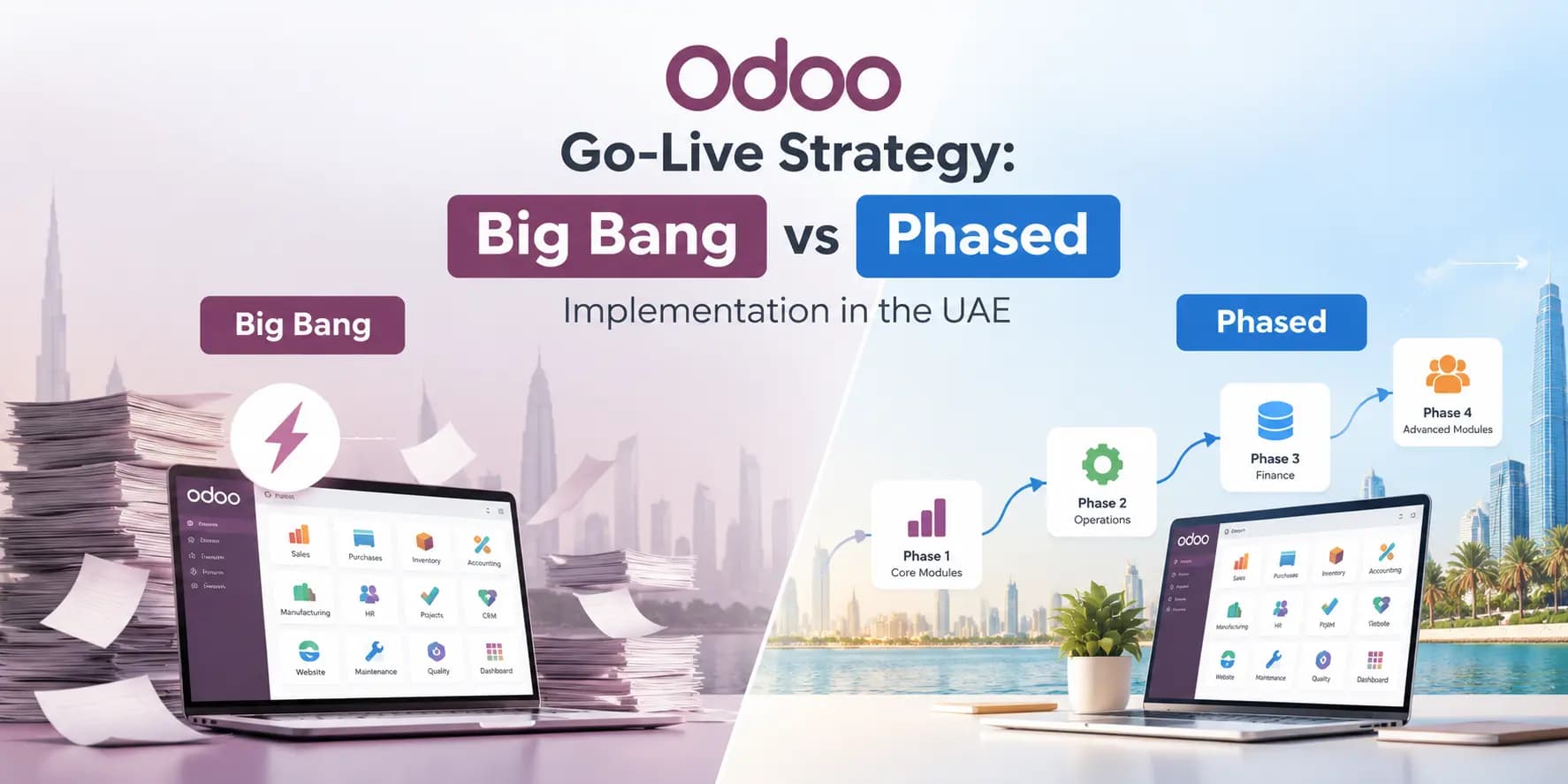
That’s why you need to go for a sensible and phased rollout. You can initially start with features like finance, sales, and inventory. Later, there’s a way to add projects, manufacturing, or analytics. It can take mainly six to eighteen months. The entire timeline depends on things like locations, integrations, and user numbers.
Book a Free ERP Consultation
Talk to our ERP experts to compare Odoo, ERPNext, TallyPrime, and other leading ERP solutions. We'll recommend the best fit for your budget and business goals.
Subscription-Based ERP: AED 100 to AED 800 per User per Month
There are also subscription-based ERPs available in the UAE that generally cost AED 100 to AED 800 per user per month.
The final figure changes by:
Product
User type
Modules,
Hosting
Annual commitment
This fee is separate from implementation. The system still needs discovery, configuration, migration, training, and support. Major ERP vendors publish per-user cloud plans while pricing project services separately.
What affects the Cost of ERP Software?
Number of users: When it comes to the cost of ERP, the number of users matters a lot.
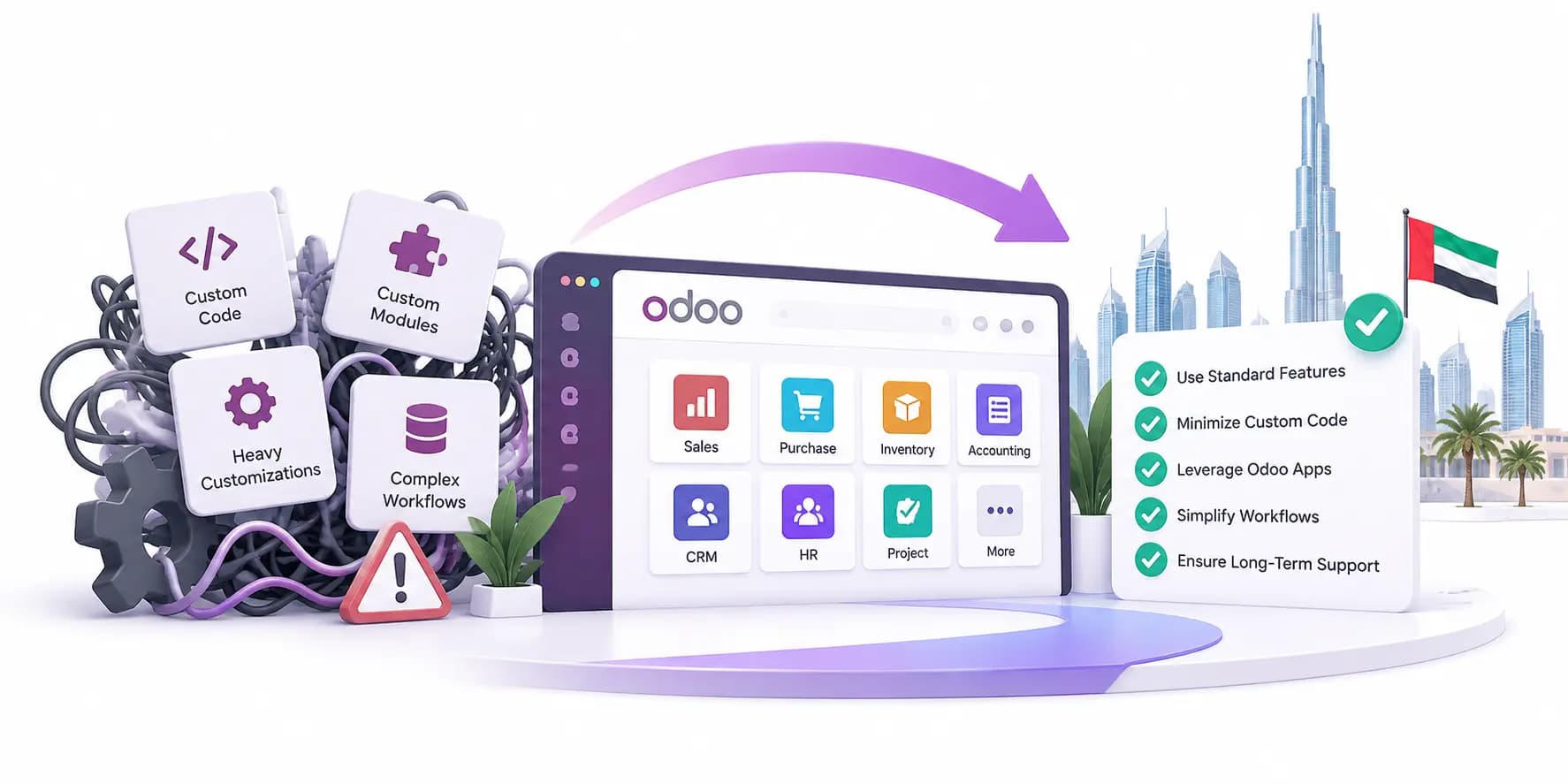
Customisation: Customisations like forms, workflows, and reports also change the entire cost of an ERP.
Complexity of industry: If your industry is too complex, then the cost can be affected as you’ll need more customisations.
Modules: The cost of an ERP can also increase because of different modules like HR, payroll, CRM, projects, WMS, manufacturing, maintenance, and business intelligence.
Implementation and support: Discovery, configuration, migration, testing, training, and post-go-live support should be clear in the proposal.
Method of deployment: Cloud can simplify infrastructure planning. On-premises may suit internal hosting requirements, and hybrid sits between the two.
UAE requirements: UAE specifications that include VAT, bilingual documents, multi-currency, and payroll can affect the price.
Hidden ERP Costs Businesses Should Be Aware of
These are ordinary project components that deserve to be named early:
Data cleansing and migration of customers, suppliers, items, and opening balances
Integrations with POS, banks, e-commerce, shipping, payroll or attendance systems
Arabic or bilingual documents, invoice layouts, labels and reports
Training for finance, warehouse, sales and approval teams
Hosting, backup, monitoring or infrastructure outside the subscription
Ongoing support, upgrades and future enhancements
UAE businesses should also consider tax records and VAT processes. The Federal Tax Authority maintains an accredited tax-accounting-software vendor listing, and VAT-registered businesses generally file returns and pay VAT due within 28 days after the tax period ends.
The Ultimate Timeline and Budget of ERP Implementation
Business Type
Typical Timeline
Planning Budget
Small business
1-2 months
AED 15,000-80,000
Mid-sized company
3-6 months
AED 80,000-400,000
Enterprise
6-18 months
AED 500,000-5 million
Request a Personalized ERP Demo
See how an ERP system can automate accounting, inventory, sales, HR, and e-invoicing. Get a live demo tailored to your business processes.
Timelines work best when people who understand daily operations are involved early. The employee who knows why a purchase order pauses often has more useful input than a polished process diagram.
Choose the Right ERP Vendor in the UAE for Your Business
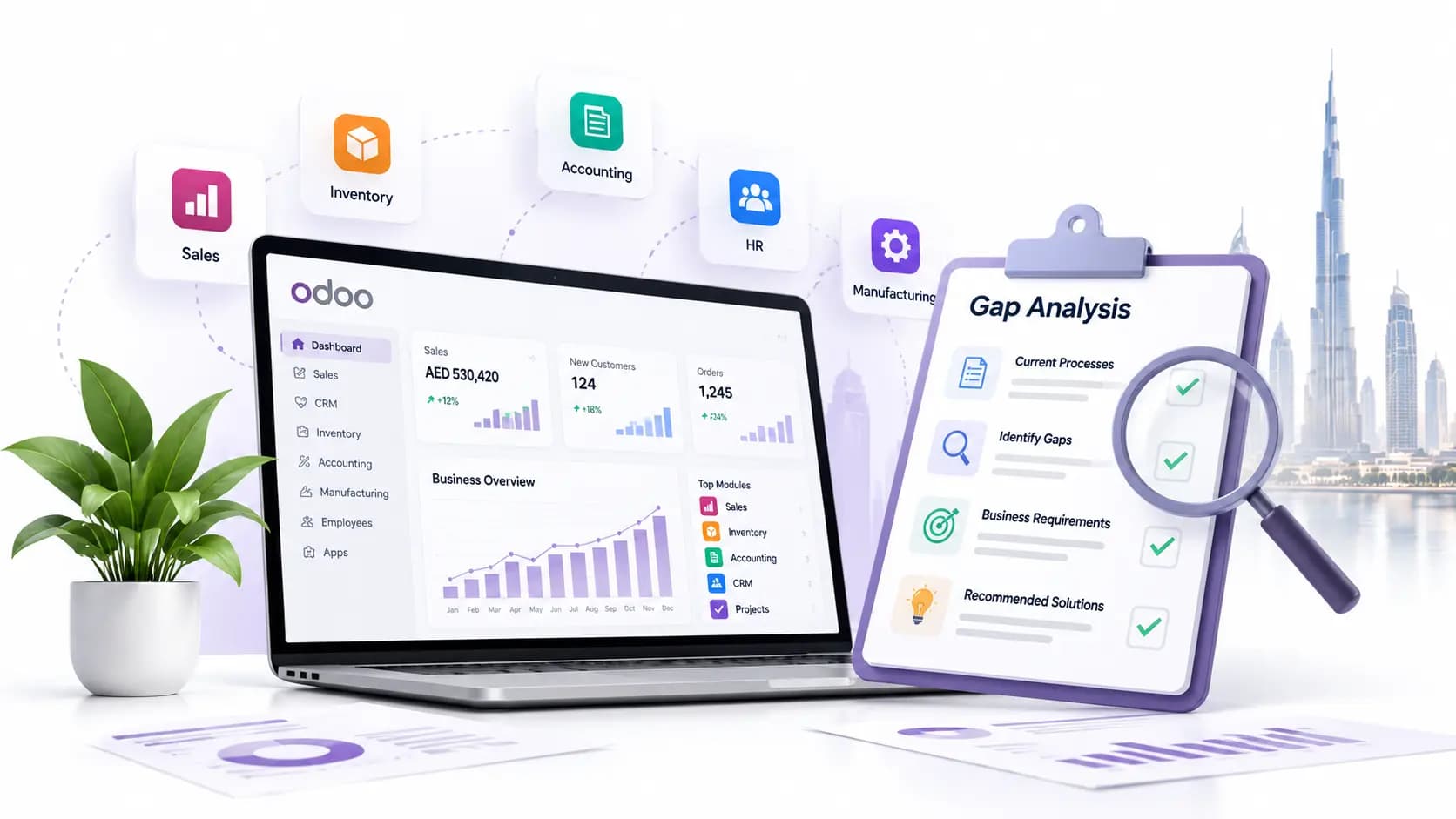
You can start with a discovery session. These sessions map current processes and priorities. Ask for a proposal that separates software, implementation, integrations, migration, training, hosting, and support, with stated assumptions for users, entities, warehouses, reports, languages, and existing systems.
Look for UAE experience in your industry. Request a demonstration based on familiar work like receiving stock, approving a purchase, issuing an invoice, reviewing margin, or closing the month.
Overall, choose a partner that explains what is standard, what needs customisation, and what can be added later.
UAE e-invoicing software integrated with ERP helps businesses automate invoice generation, validation, and secure exchange while ensuring compliance with the UAE's upcoming e-invoicing framework. Modern ERP solutions streamline accounting, VAT reporting, inventory, and finance, reducing manual work, improving accuracy, and preparing businesses for seamless digital tax compliance.
Reasons to Choose Penieltech for ERP Implementation
At Penieltech, our team supports UAE businesses with ERP, accounting software, CRM, cloud services, and related IT solutions. Our ERP portfolio includes accounting, inventory, sales, HR payroll, manufacturing, customer management, purchasing, and project functions.
For companies comparing ERP options, that combined coverage means one implementation partner can directly support discovery, platform selection, setup, user training, and ongoing improvements.
We also let the project begin with the modules that matter most, such as finance and inventory, then widen only when the operational case is clear and practical for the team.
Remember, the right ERP price is the budget that provides the processes, data, and support the business needs now, without paying for a future it has not reached yet.
FAQ
How much does ERP software cost in the UAE?
ERP software implementation in the UAE typically starts from AED 15,000 for small businesses and can exceed AED 5 million for large enterprises. The final cost depends on the number of users, modules, customizations, integrations, and deployment model. Typical planning ranges are AED 15,000–80,000 for small businesses, AED 80,000–400,000 for mid-sized companies, and AED 500,000–5 million for enterprises.
What factors affect ERP software pricing in the UAE?
ERP pricing is influenced by business size, required modules (Accounting, HR, CRM, Inventory, Manufacturing), cloud or on-premise deployment, implementation complexity, customization, third-party integrations, data migration, user training, and annual support services.
How long does ERP implementation take?
Implementation timelines vary based on project scope:
Small Business: 1–2 months
Mid-Sized Company: 3–6 months
Enterprise: 6–18 months
Projects with extensive customization or multiple business locations may require additional time.
Which ERP software offers the best value in the UAE?
The best ERP depends on your business requirements. Popular choices include Odoo, ERPNext, Microsoft Dynamics 365, SAP Business One, Oracle NetSuite, and TallyPrime. SMEs generally prefer scalable cloud ERP solutions, while large organizations often choose enterprise-grade platforms.
Does ERP software include UAE VAT and e-invoicing compliance?
Most modern ERP systems can support UAE VAT requirements and upcoming UAE e-invoicing regulations when properly configured. Businesses should choose an ERP implementation partner that understands local compliance and future regulatory updates.
Related Articles
Explore more insights, ideas, and practical knowledge from our latest writings.
We work with our global presence and keep our advice practical, response times reasonable, and provide solutions that are aligned with the way local companies operate each day.
Market Context
Deep knowledge of UAE rules and expectations.
Trusted Network
Working connections across businesses, sectors, and communities.
Local Assistance
We have a local team that answers clearly when something genuinely needs attention.
UAE Presence
Our team works from the UAE, supporting companies that keep its economy moving.