Why Cheap Business Software Can Cost More in the Long Run
N
Namrata
Author
Published: 24 Nov 2026
Last Updated: 24 Nov 2026
Approx. Read Time: 10 mins
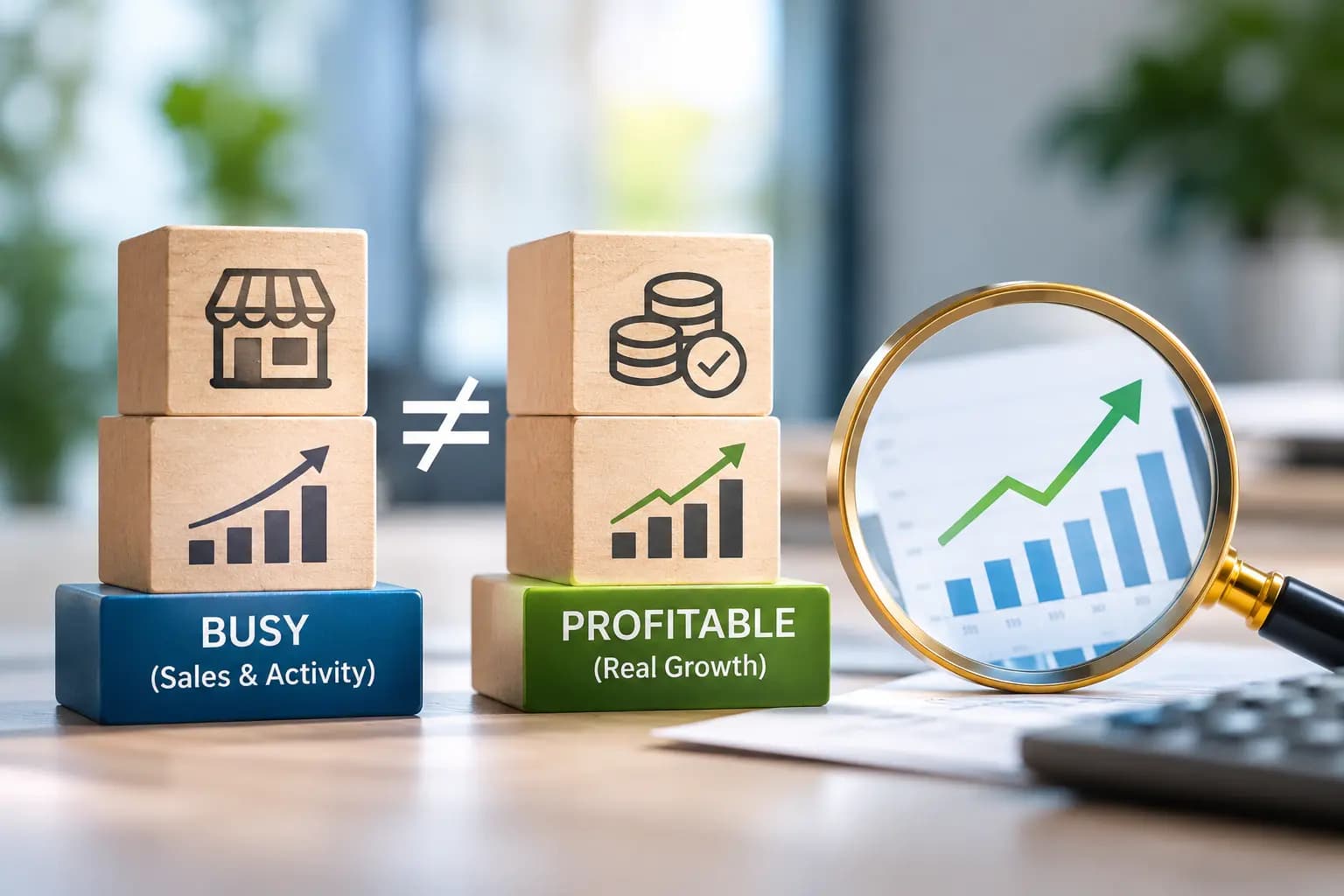
Quick Verdict: Cheap business software may look like the cheaper option initially but the reality is that implementation, integrations, upgrades, support and downtime can all end up being very expensive. The real cost to a UAE business isn't the subscription at all. It's everything you need to install it, run it, maintain it and then ultimately grow it.
The low subscription fees make it look like such a straightforward decision when you're buying business software. That's particularly the case when you're on a tight budget and there are a number of different vendors all offering pretty much the same thing.
But what you see on a website is rarely the full story.
There are setup fees, employee training, system integrations and maintenance which may only become apparent after you’ve bought the software. Some businesses find that even the most basic of functions end up requiring additional subscriptions.
It's the problem of buying software without any real understanding of what it’s going to cost to operate.
Quick Answer
Cheap business software can end up costing you a lot more than you realise when you throw in the cost of implementation, training, integrations, upgrades and technical support. A low subscription price isn't necessarily going to be the cheaper option over the long term for a business in the UAE. It's worth looking at the total cost of ownership over a three to five year period to avoid surprise costs and expensive replacements down the track.
What is the Total Cost of Ownership and why are price tags so misleading?
Fact: The purchase price is not the same as the total cost of ownership.
The total cost of ownership (TCO) is what the business will spend on the software over its lifetime.
A subscription may be AED 200 per month but installation, training, technical support and integration with existing applications is not included.
It is a straightforward calculation:
Licensing + Implementation + Integration + Training + Support + Upgrades + Downtime = Total Cost of Ownership
These are the main cost components, though the actual cost will of course depend on the software and the business requirements.
When UAE companies are looking at accounting softwares, ERP's and CRM's the TCO calculation over a 3-5 year period gives a much more realistic financial picture.
A slightly more expensive system with support and integrations might in fact end up costing less than a cheaper alternative which would then require all sorts of additional expenditure down the line.
Where Cheap Software Starts to Cost More: Implementation Costs
Verdict: Cheap software doesn't necessarily mean affordable implementation.
Software is one of the costs. Getting it ready for day to day use is another.
Setup and Data Migration
The new system will need to incorporate the existing customer records, the financials, the inventory and the supplier data.
Problems occur when there are duplicates, inconsistent formatting or missing data in the records.
Employees can spend days re-keying the transactions and re-checking the opening balances on spreadsheets.
Configuration and Customization
Some of the cheaper apps have very limited configuration options.
Then the businesses pay the developers to rework the processes, produce the reports and build the features that aren't in the standard package.
This also translates into higher maintenance costs down the line.
Training & Adoption
When staff can’t use the software easily it becomes very costly.
Poor onboarding leads to errors, a lot of repeat support requests and slower day to day operations.
Even subscriptions that aren't actually used continue to cost you money.
Software installation should be more than just the installation of the software itself. It should also include configuration, data validation, testing and employee training.
Integration Costs: When Your Tools Don’t Communicate
Fact: software that doesn't share information creates more manual work.
A UAE based business could have different applications for accounting, inventory, payroll and customer management.
If the systems can't talk to each other then the info has to be passed manually by the staff.
A sales application order may well have to be re-entered into inventory and accounting.
Companies may end up having to purchase middleware, third party connectors or custom development to get the APIs they need if those APIs aren't readily available or if there are no native integrations.
Let us do an illustrative calculation:
Manual data entry: 8 hrs/week
Cost of Employee: 50 AED/hr
Weekly price: AED 400
Annual cost: AED 20,800 / 52 weeks
That’s AED 20,800 a year spent on a task which could be eliminated entirely through proper integration.
Duplicate records and inconsistent departmental reports create further problems.
Before you go out and buy the software you're considering you need to make sure that the integrations actually support the way you work.
Upgrade & Scalability Costs: Paying More As You Expand
Verdict: The software that will fit within today's budgets may well not be up to the job of tomorrow.
Lots of vendors have very attractive entry level subscriptions.
However prices vary considerably when you have a business that requires more users, more branches, more storage and more advanced reporting.
You may need to pay for the add-ons for features such as automation, inventory tracking and approval workflows.
The bigger cost is when the app can't scale with the growth of the business.
Moving to another platform means you pay again for the migration, the implementation and the training.
Companies in the UAE looking to scale up should look at the pricing slabs and the limitations of the system for the future before they make a decision.
Support and Maintenance: The Price of Waiting for Help
Fact: Technical support is a financial issue as a result of software problems which are in turn disrupting operations.
Think of an accounting system being down during a critical reporting period.
Employees cannot process transactions, access records or carry out any scheduled work.
The disruption is more expensive if the vendor's support is limited to email replies with a delay.
Some of the low cost subscriptions don't include priority support, on site support or a dedicated technical team.
Maintenance must be given equal weight.
Software requires security patches and bug fixes and updates to take account of changes in regulation.
UAE based businesses may be required to adjust their accounting systems to meet the requirements of VAT and the relevant e-invoicing requirements.
An unsupported application can give rise to a compliance issue and a security exposure.
Stability of the vendor is also important. If you're stuck with a range of discontinued products and providers who are effectively operating on a shoestring then your business could be looking at another unforeseen migration at some point.
Other hidden costs most buyers don’t know about
Some software charges are never broken down on the vendor’s invoice.
A bad interface can turn a simple task into a lengthy one.
Employees waste time going looking for information, going back and correcting entries, doing all sorts of things that are totally unnecessary.
Other costs that are often ignored are:
Security risks: Exposure of sensitive business information as a result of inadequate protection.
Frustration with the staff: Complex systems require far more training and generate far more dissatisfaction.
Project delays: Any improvements that were intended may be delayed as a result of software limitations.
Contractual limitations: Cancellation penalties and the length of the commitment will of course limit your flexibility.
Lost opportunities: Slow reporting leading to delayed purchasing, pricing and operating decisions
These costs are harder to quantify than the subscription fees, but they do have an impact on your business performance.
How to Evaluate Software Beyond the Cost
Judgment: Don't just compare the advertised subscription to the full cost of using the software. Start by projecting your expenses out for 3 to 5 years into the future.
Consider licensing, implementation, integrations, support and upgrades and the likely internal man hours.
Next, ask vendors specific questions:
Is installation, migration and training all included?
What if you need more users or more branches?
What integrations are native?
What integrations do you have to pay for?
Does it contain any technical support or regulatory updates?
What are the cancellation terms and data export options?
Ask for customer references and check out independent reviews (be especially wary of those that talk about the implementation and the after sales service).
A pilot with actual business workflows is just as useful.
Before you go and sign off on it, test out the invoice processing, the inventory updates, the reporting and the employee access.
The final call for UAE businesses can also be influenced by local implementation expertise and familiarity with the regulatory environment.
Conclusion
Final verdict: The cheapest software is the one that gets the job done at the lowest sustainable overall cost.
If it actually works for the business requirements then an affordable subscription isn't a bad thing at all.
The problem is when missing features, poor integrations and unreliable support all end up with you incurring unexpected costs.
Before you sign off on any software agreement you must find out the cost of implementing, running and maintaining the system over a number of years.
The starting price is key. But the cost of actually running your business on that software is a lot more important.
FAQs
Why does low cost business software get so expensive over time?
The subscription may be cheap, that doesn't necessarily mean the spending stops there. You could end up with additional costs for installation, employee training, extra features and technical support. As your business grows those costs can add up and in some cases the cheaper software can end up being more expensive than a better equipped alternative.
What are the hidden costs to be on the lookout for before you go and buy business software?
Implementation, data migration, integrations and support costs first. Then you can look at what happens when you have more users or want to go further with the product. Some of the vendors will charge you for upgrades, extra storage and for exporting your data. It’s definitely better to ask about those costs prior to signing the contract rather than find yourself facing them down the track.
Is more expensive business software always better than cheaper software?
Not at all. Higher price doesn't necessarily equate to better performance or more useful features. Some of the lower priced systems will be quite adequate for a smaller business. The key thing is how well the software can do the job of your day to day operations, how well it integrates with your existing tools and how well it supports your business without you having to spend all the time and money on it.
How can UAE businesses work out the real cost of software?
Think beyond the monthly or annual subscription. Throw in the cost of implementation, training, integration, maintenance and the likely cost of upgrades. Add in the time that your staff will be spending managing the system. If you work out the total cost over a 3 to 5 year period you'll have a much better idea of what the software is actually going to cost.
Related Articles
Explore more insights, ideas, and practical knowledge from our latest writings.
We work with our global presence and keep our advice practical, response times reasonable, and provide solutions that are aligned with the way local companies operate each day.
Market Context
Deep knowledge of UAE rules and expectations.
Trusted Network
Working connections across businesses, sectors, and communities.
Local Assistance
We have a local team that answers clearly when something genuinely needs attention.
UAE Presence
Our team works from the UAE, supporting companies that keep its economy moving.