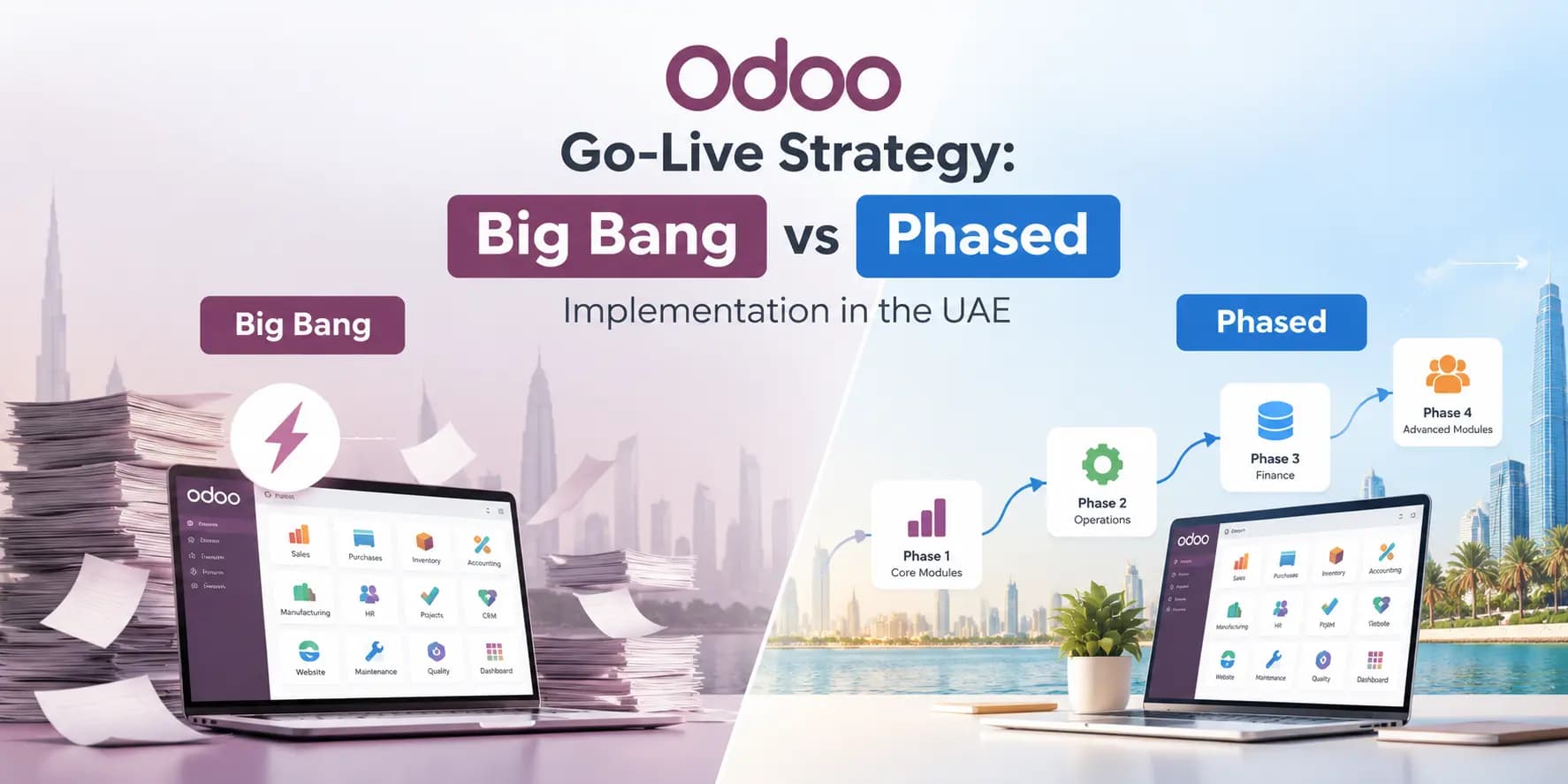
Across the UAE, Odoo has become a go-to ERP choice for growing companies in different sectors, from trading and logistics to retail, manufacturing, and services. It’s flexible, modular, and comparatively budget-friendly. So, it definitely ticks every box as perfect software.
Yet globally, a large chunk of ERP projects still struggle because of things like weak requirements, poor data preparation, unrealistic timelines, and a lack of user training. Not because the software is bad, but because the implementation went off track.
In the UAE, there’s another layer including VAT, corporate tax, multi-company setups, regional logistics, and fast expansion across the GCC. If your Odoo partner doesn’t understand that, the system will automatically start drifting away from your real operations.
So the real question here is - “Is our partner still right for where we’re headed?” Well, at some point, staying loyal to the wrong partner becomes more expensive than making a switch.
Signals you can’t ignore
Small annoyances often turn into big problems over time. So, watch for these patterns:
Projects that never finish to spec: You can see timelines slide, “scope” expands every week, and what’s delivered doesn’t support how people actually work.
Users avoid the system: They fall back to spreadsheets because reports become unreliable or controls get in the way.
Compliance gaps: VAT, e-invoicing, group reporting, and audit trails will become messy or manually patched. In the UAE context, those compliance failures carry operational and financial risk.
Maintenance becomes creative engineering: Instead of improving processes, your software partner keeps adding fragile custom code that breaks actual upgrades.
Thin communication and no roadmaps: You’re given deliverables without the logic behind them, and knowledge transfer is also incomplete.
Get Control Back on Your Odoo Project
If timelines keep slipping or features never work as promised, it’s a sign your implementation needs a reset. A new partner helps you regain control with a clear roadmap and accountability.
Why switching is the strategic move
Switching partners is framed by some as risky and expensive. In truth, staying with a partner that treats ERP as a tool-for-now creates ongoing costs for you like repeat fixes, manual workarounds, slowed decision-making, and missed opportunities. When partners provide heavily customized systems that ignore upgrade-safe patterns, future Odoo upgrades become a major project rather than a straightforward improvement. That’s definitely a debt that compounds.
The right time to change your Odoo partner
Pick the change moment with intent, not being impulsive. These are the clear, objective triggers:
Your team will struggle with repeated compliance incidents or impending regulatory deadlines (e.g., e-invoicing rollouts, updated VAT rules). If your partner cannot clearly show how your system meets these requirements, it’s time for you to act.
A failed upgrade or an upgrade plan that looks like rebuilding the entire system is your signal.
Persistent user adoption problems that training won’t fix.
Support tickets that turn into long development cycles instead of fixes.
If you see one of these, consider the clock to have started. The sooner you act, the less work you’ll undo.
How to change partners without breaking operations
Switching partners doesn’t always need to be a cliff dive for you. It can be a staged and controlled handover:
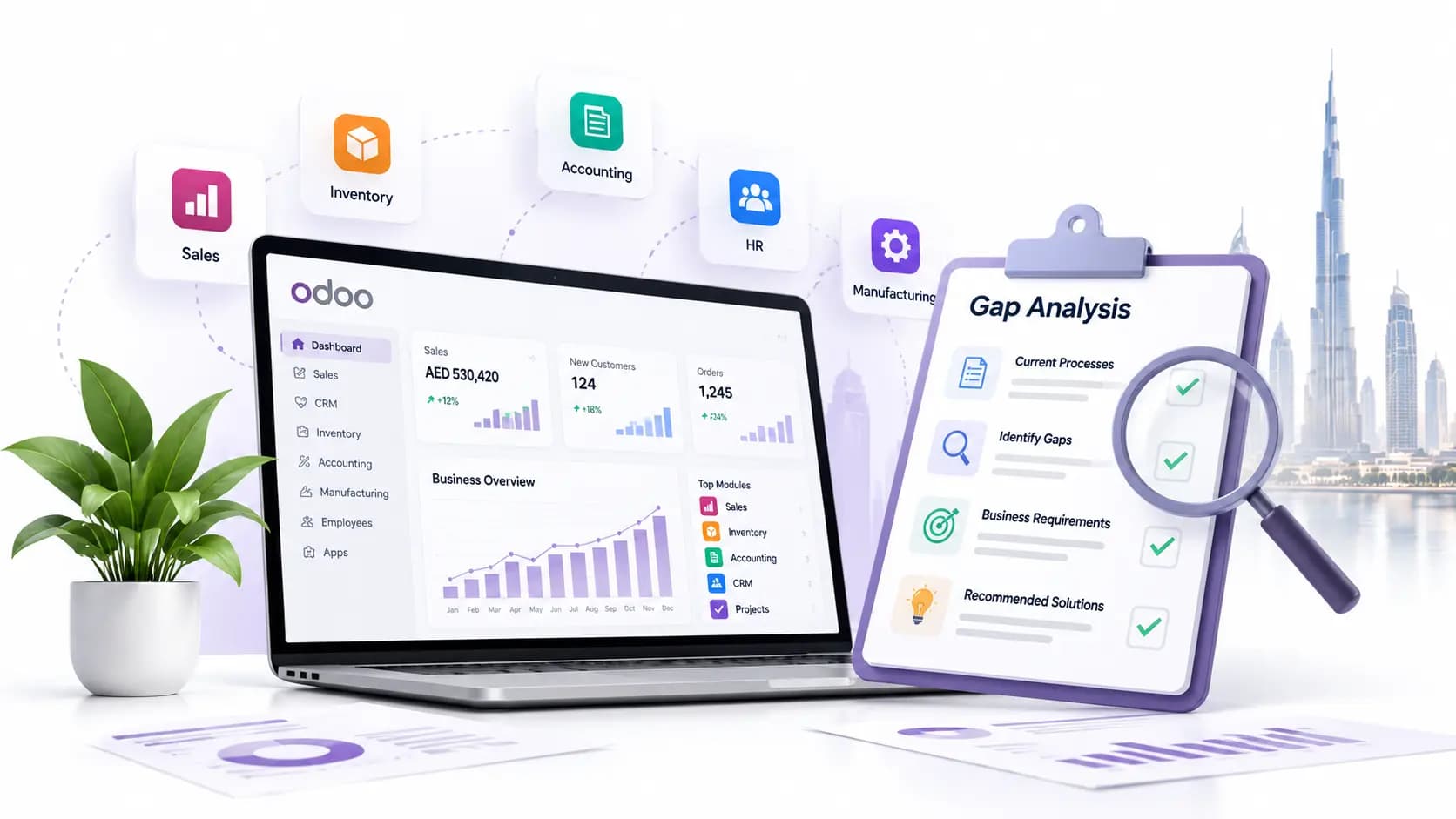
Clarify the current state: Assemble a short and practical dossier regarding what works, what doesn’t, key customizations, where data stays, and what regulatory requirements are critical. Make sure you own all the data and credentials.
Demand a technical and functional audit: A new partner should offer a non-invasive audit that maps custom code, integrations, and upgrade risks. This audit should prioritize quick wins and high-risk items.
Secure knowledge transfer: Request documentation, architecture diagrams, and technical access. If the incumbent resists, that resistance is itself justification for switching.
Prioritize compliance and data integrity: Ensure VAT, e-invoicing, and reporting paths are validated early during the transition.
Fix What’s Broken Without Starting Over
A strong Odoo partner audits your current setup, fixes gaps, and improves performance without forcing a full reimplementation. You save time, cost, and internal effort.
How to pick the right Odoo partner for the UAE
Look beyond badges and slide decks. These factors separate transactional implementers from true partners:
Local regulatory fluency: A UAE-aware partner will definitely understand VAT nuances, free-zone accounting, and new e-invoicing frameworks.
Consultative discovery: The partner asks hard operational questions up front, like how you actually make decisions, how approvals flow, and what reports leadership needs, before they touch the keyboard.
Upgrade-safe architecture: They always prefer configuration and extension points over invasive customizations.
Clear SLAs and support models: Know about the response times, escalation matrix, and the way they handle post-go-live training and change requests.
References that match your vertical and scale: Speak to clients who have similar operations and ask specifically about compliance work and upgrades.
Ask practical and non-technical questions that reveal their operational thinking. The answer will tell you if they’re implementers or growth partners.
Avoid these common transition mistakes
Starting before you secure your data and credentials.
Accepting vague audits. A good audit is actionable and scoped.
Thinking about a partner swap solves culture problems.
ERP projects succeed when you treat them like business change, not just software purchases.
Basically, ERP is a long game, and the right partner makes it a growth engine. But a wrong partner can make it an anchor. In the UAE, where regulatory change is active and growth expectations are high, you need a partner who understands both business and compliance, who documents and designs for upgrades, and who speaks plainly about trade-offs. If your Odoo system slows down decisions, burdens finances, or fails to keep up with VAT and e-invoicing realities, switching partners is not a cost; rather, it’s the investment that protects your operations and future-proofs your ERP.
So, are you ready to evaluate your current setup? Well, then wait no more. Contact Penieltech today and get the best Odoo partner in the UAE. We are waiting here to support you throughout your entire Odoo project and provide the best service ever.
Get Reliable Support When Your Business Needs It
Slow responses and unclear answers hurt daily operations. The right partner offers proactive support, faster resolutions, and practical business guidance.
Related Articles
Explore more insights, ideas, and practical knowledge from our latest writings.
We work with our global presence and keep our advice practical, response times reasonable, and provide solutions that are aligned with the way local companies operate each day.
Market Context
Deep knowledge of UAE rules and expectations.
Trusted Network
Working connections across businesses, sectors, and communities.
Local Assistance
We have a local team that answers clearly when something genuinely needs attention.
UAE Presence
Our team works from the UAE, supporting companies that keep its economy moving.