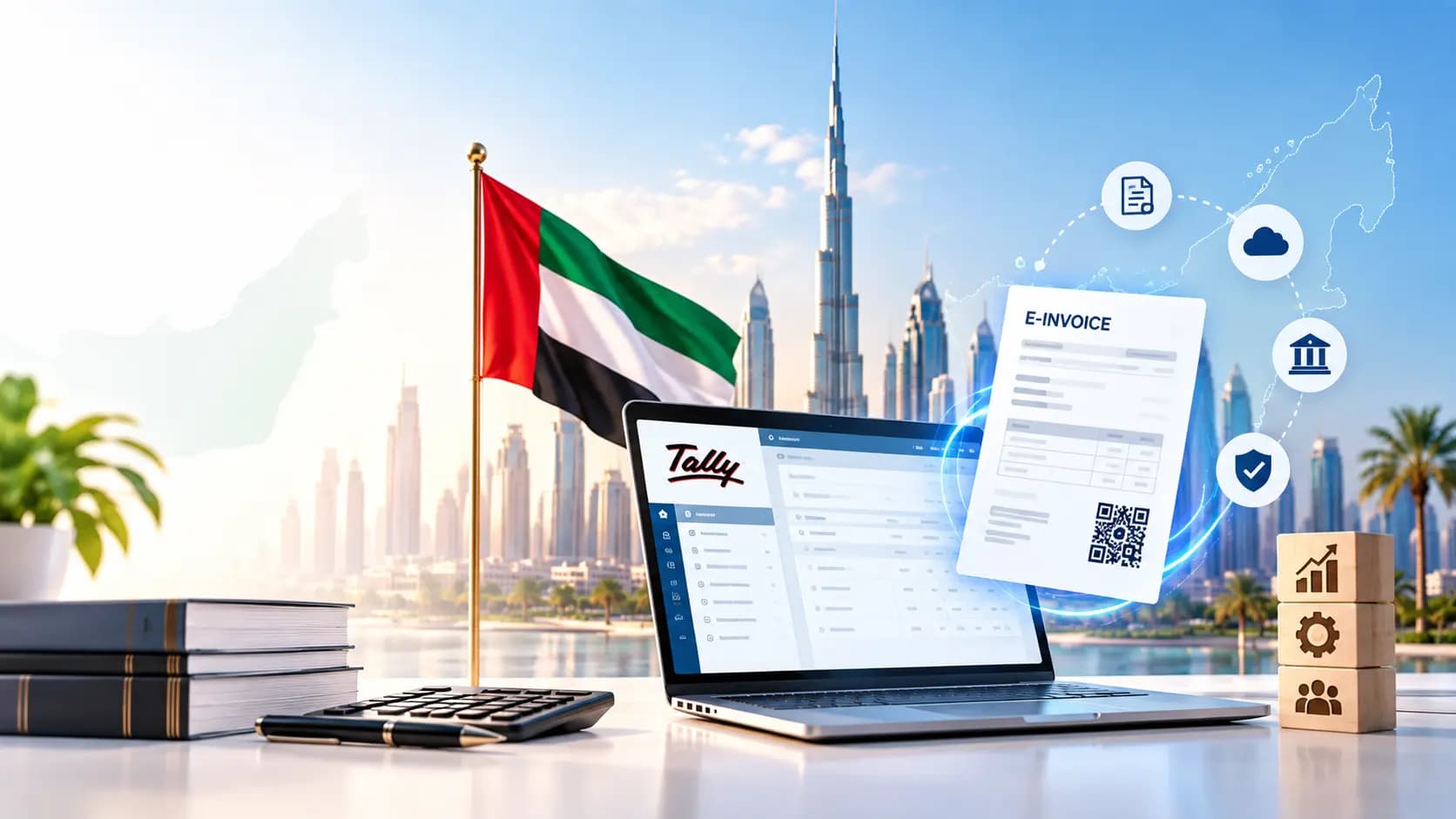
Saudi companies no longer choose accounting software only to post journals, print invoices, and close the month. The system now sits directly inside tax compliance. ZATCA’s e-invoicing rules, VAT reporting, data-protection obligations, and Saudi accounting requirements mean the software has to understand the local operating environment.
Quick Answer
Saudi accounting software has to do more than record transactions. It should handle Fatoora, 15% VAT, withholding tax, Arabic invoices, audit records, secure access and reliable reporting. The real test is simple. Can the system meet Saudi rules without forcing the finance team to fix everything manually afterward each month?
That changes the buying question. “Does it have accounting?” is too basic. The useful question is if the system can handle Saudi rules while giving finance teams records they can actually rely on.
Regulatory Compliance Requirements
- Fatoora is the first test. Phase 1, the Generation Phase, has been in effect since 4 December 2021 and requires covered taxpayers to issue and store invoices electronically through a compliant solution. Phase 2, the Integration Phase, started on 1 January 2023 and is being introduced in waves. It adds structured formats, extra fields, security controls, and integration with ZATCA’s Fatoora platform.
- For Phase 2, standard tax invoices need to be submitted to ZATCA for clearance through APIs. So the system needs more than a PDF button. It must generate compliant XML, preserve required invoice data and support the clearance or reporting flow.
- The VAT engine matters just as much. Saudi Arabia’s standard VAT rate is 15%, while some supplies are zero-rated or exempt. A reliable accounting system needs to apply the correct treatment.
- Cross-border payments add another layer. Payments from Saudi sources to non-residents may fall within withholding-tax rules. A useful system tracks the vendor, payment nature, tax treatment, deduction, and reporting period in one trail.
- Record retention is practical, not decorative. ZATCA guidance generally requires VAT records for at least six years, with longer periods for certain capital-asset records. The software should preserve invoices, notes, adjustments, approvals, and their history.
Language and Localization Needs
- Saudi accounting software should work comfortably in Arabic and English. ZATCA states that information visible on the human-readable tax invoice must be in Arabic and English may appear alongside it.
- RTL handling should also work properly in invoices, statements, reports, and exported PDFs.
- Hijri calendar support is useful for local workflows, while ZATCA’s electronic invoice date fields use the YYYY-MM-DD format. Good software can support both without confusing one with the other.
Integration Requirements
Integration is where ordinary accounting packages start to separate from business systems that can grow with the company.
Useful connections may include:
- ZATCA APIs for Phase 2 e-invoicing
- Local bank feeds or imports for reconciliation
- POS systems for retail, restaurants, and hospitality
- Payroll for employee costs
- CRM or ERP modules for sales, purchasing, projects, and inventory
The point is not to connect everything because a vendor brochure says you can. A sales invoice should move from the commercial record to accounting and, where required, into the ZATCA process without somebody rebuilding the transaction manually.
Data Security and Hosting
- Financial systems hold names, IDs, payroll information, customer records, and transaction histories. Data governance therefore sits beside accounting.
- Saudi Arabia’s Personal Data Protection Law and its regulations require appropriate organizational, administrative, and technical measures for personal data security. Access should be role-based, sensitive actions traceable, and stored or transmitted information properly protected.
- Hosting needs a precise answer. PDPL permits cross-border transfers under defined conditions. At the same time, organizations subject to National Cybersecurity Authority controls or sector-specific rules may have in-Kingdom hosting requirements. A Saudi company should check the rules applying to its sector before selecting a cloud region.
Industry and Business-Size Requirements
- A ten-person consultancy and a multi-branch distributor do not need the same setup. An SME may focus on invoicing, VAT, expenses, reconciliation, receivables, and clear reporting. At the same time, a larger company may need multiple branches, approval levels, detailed permissions and higher transaction capacity.
- The same thing goes for industries. Manufacturers need production costing, bills of materials, work-in-progress, and stock valuation. Similarly, construction and contracting companies need project budgets, progress billing, retention, subcontractor costs, and project profitability.
- Growth simply means the software still makes sense when another branch, warehouse, legal entity, or group of users is added.
Reporting and Analytics Capabilities
- Management should be able to see the books without waiting for a month-end spreadsheet exercise. Core reporting should include cash flow, profit and loss, balance sheet, receivables, payables, VAT positions and drill-down from totals to transactions.
- For statutory reporting, companies should consider support for IFRS as endorsed in Saudi Arabia by SOCPA. Dimensions such as branch, project, department, salesperson, and cost centre make the same data much more useful for everyday decisions.
Conclusion
For a Saudi company, accounting software is now part ledger, part tax system, part evidence file, and part integration layer. The right choice is the one that fits the company’s actual Fatoora, VAT, Zakat, WHT, reporting, language, security, and industry requirements while leaving finance teams with one dependable set of records.
FAQS
- What should Saudi companies actually look for in accounting software?
Start with the things that cause trouble when they are missing. This includes ZATCA e-invoicing, VAT treatment, Arabic invoice support, audit history, permissions, and usable reports.
- Does accounting software need to connect with ZATCA?
For companies covered by Phase 2, yes. The software needs to handle the required invoice data and support the clearance or reporting process with ZATCA. This is where older systems often start showing their age.
- Is a PDF invoice enough for Saudi e-invoicing?
No. A PDF may be what the customer sees, but Phase 2 works underneath that visible invoice. Structured data, required fields, security controls, XML, and ZATCA integration matter. An invoice can look perfectly professional on screen and still not meet the technical requirements.
- Does Saudi accounting software need Arabic support?
Yes, and not just an Arabic button in the menu. Invoice information needs proper Arabic presentation, and right-to-left formatting should survive printing and PDF export.
- Can a small Saudi business use the same system as a large company?
Sometimes, but the setup will not be the same. A small service company may care about invoicing, expenses, VAT, collections, and bank reconciliation. A multi-branch distributor may need warehouses, approval levels, user restrictions, purchasing controls, and far more transaction capacity.
- How important is data security in accounting software?
Accounting systems contain far more than ledger entries. They may hold customer details, payroll information, IDs, bank data, and years of transaction history. Access should be controlled properly, sensitive actions should be traceable and hosting choices should be checked against the company’s actual Saudi regulatory obligations.