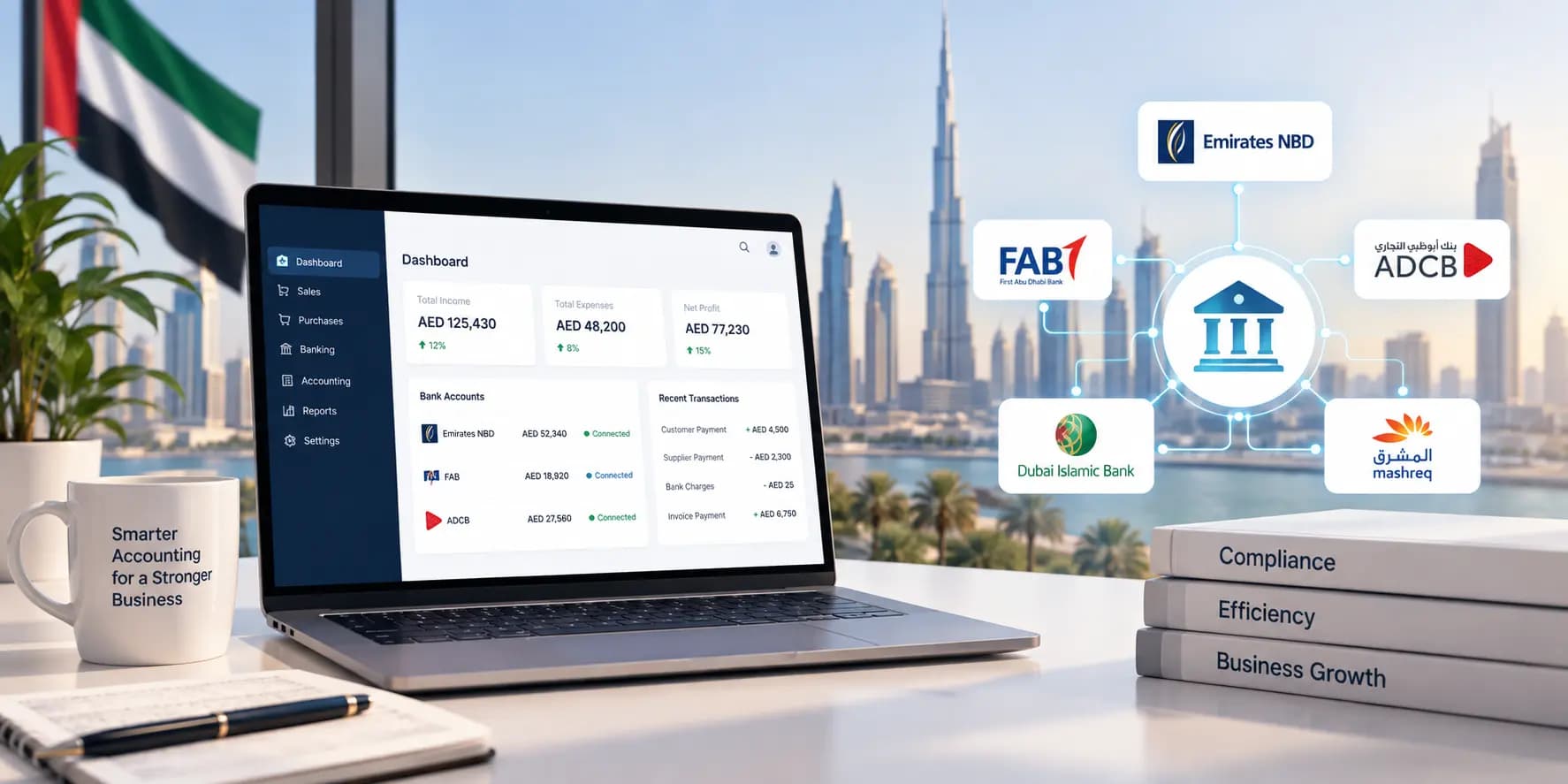
UAE e-invoicing is not a small formatting change. It is not about replacing a printed invoice with a PDF. That is the part many businesses may quietly misunderstand.
Quick Answer
Businesses required to comply with the UAE e-invoicing system may face AED 5,000 per month for failing to implement e-invoicing or appoint an approved service provider. Late invoice or credit-note issuance may result in AED 100 per document, capped at AED 5,000 per month, while certain delayed notifications can attract AED 1,000 per day penalties.
A PDF invoice saved from accounting software and emailed to a customer may look digital, but under the UAE Electronic Invoicing System, the invoice has to be issued, transmitted, received, exchanged, and reported in a structured electronic format. The UAE framework uses Accredited Service Providers, often called ASPs, and the invoice data moves through the system instead of sitting privately inside one company’s software until VAT filing time.
Earlier, invoice mistakes were often discovered late. Maybe during VAT return preparation, during audit, or when the customer asks for a correction weeks later.
With e-invoicing, invoice data becomes part of a live compliance trail. That does not mean businesses need to panic. But it does mean the casual attitude toward invoicing will not work for long.
The Important UAE e-Invoicing Dates
The UAE e-invoicing rollout starts with a pilot programme on 1 July 2026. The Ministry will contact selected businesses, and participation in the pilot requires written agreement.
From the same date, businesses can also voluntarily adopt e-invoicing, regardless of revenue. The important comfort here is that e-invoicing penalties will apply only from the date a business is required to mandatorily implement the system.
The mandatory timeline is phased:
Business Category
Last Date to Appoint ASP
Last Date to Implement UAE e-Invoicing
Person with annual revenue AED 50 million or more
31 July 2026
1 January 2027
Person with annual revenue below AED 50 million
31 March 2027
1 July 2027
Government entity
31 March 2027
1 October 2027
These dates matter because one of the penalties is directly linked to delay in implementation or delay in appointing an Accredited Service Provider.
Your ASP deadline is closer than you think
The July 2026 mandate is live. If your ERP isn't connected to an Accredited Service Provider yet, the AED 5,000 monthly fine starts ticking. Let our team assess your readiness in one call.
What the New Penalty Framework Actually Says
Cabinet Decision No. 106 of 2025 sets out specific administrative penalties for violations of the UAE Electronic Invoicing System. The decision applies to people who are required to comply with e-invoicing rules, but it does not apply to businesses that are issuing or reporting e-invoices voluntarily before their mandatory date.
1. Delay in Implementing e-Invoicing or Appointing an ASP
If an issuer fails to implement the Electronic Invoicing System, including failing to appoint an Accredited Service Provider within the prescribed timeline, the penalty is:
AED 5,000 for each month of delay, or part of a month.
This is the penalty that many businesses should pay attention to first. Not because it is the biggest number on paper, but because it can happen before a single invoice is even issued under the new system.
A company may think that they still have time. Then the ASP selection takes longer than expected. ERP changes take longer, and the customer master data becomes messy. At the same time, TRNs go missing, branch details do not match, and suddenly, the deadline is not far away anymore.
The fine is only one part of the problem. The bigger issue is being technically unready when customers and suppliers have already moved ahead.
2. Failure to Issue and Transmit an Electronic Invoice on Time
If the issuer does not issue and transmit an electronic invoice to the recipient through the Electronic Invoicing System within the prescribed timeline, the penalty is:
AED 100 per electronic invoice, capped at AED 5,000 per calendar month.
This may look small at first. AED 100 does not scare most companies. But this penalty is not really about one invoice. It is about repeated failure.
Imagine a trading company issuing hundreds of invoices a month. If the system is not integrated properly, invoices may be created in the ERP but not transmitted correctly.
The accounts team may not notice immediately because, from their screen, the invoice “looks done.” That gap between “invoice created” and “invoice successfully transmitted through the approved system” is where problems begin.
Under the e-invoicing model, sending a document to the customer is not enough. It must move correctly through the system.
3. Failure to Issue and Transmit an Electronic Credit Note
If the issuer fails to issue and transmit an electronic credit note through the system within the prescribed timeline, the penalty is:
AED 100 per electronic credit note, capped at AED 5,000 per calendar month.
Credit notes are usually where accounting gets untidy. It includes returned goods, pricing corrections, cancelled services, quantity changes, and wrong VAT treatment. In the meantime, someone in sales is promising a discount after the invoice has already been raised.
These are normal business situations. But under e-invoicing, credit notes cannot be treated as a casual month-end cleanup task. They need to be issued and transmitted properly.
4. Failure by the Issuer to Notify the Authority of a System Failure
If the issuer fails to notify the Federal Tax Authority of a system failure within the prescribed timeline, the penalty is:
AED 1,000 for each day of delay, or part of a day.
Ministerial Decision No. 243 of 2025 says every issuer and recipient must notify the Authority of a system failure within 2 business days from the date of occurrence, using the mechanism and procedures determined by the Authority.
This is a practical point, not just a legal one. Systems often fail, internet connections drop, integrations break after updates, tokens expire, and APIs reject data. Anyone who has worked with business software knows this. The uncomfortable truth is that “our system was down” is not a complete defence if nobody reported it properly.
5. Failure by the Recipient to Notify the Authority of a System Failure
Recipients also have responsibilities. If the recipient fails to notify the Authority of a system failure within the prescribed timeline, the penalty is:
AED 1,000 for each day of delay, or part of a day.
This is one of those details buyers may underestimate. Many companies think e-invoicing is mainly a supplier-side issue. That is only partly true. The recipient is also part of the electronic flow and has obligations around receiving and processing electronic invoices and credit notes. Ministerial Decision No. 243 specifically refers to recipients processing electronic invoices and credit notes through the system.
6. Failure to Notify the ASP About Changes in Registered Data
Is your accounting software e-invoicing ready?
Not every ERP or cloud accounting package connects to an ASP out of the box. We help UAE businesses configure TallyPrime and other software to meet the PINT AE XML standard — before the deadline, not after.
If the issuer or recipient fails to notify the appointed ASP of changes to the data registered with the Authority within the prescribed timeline, the penalty is:
AED 1,000 for each day of delay, or part of a day.
It is exactly the kind of thing businesses forget. It may include a trade licence detail change, an added branch, a registered address update, or tax-related record changes.
Someone completes the government update, keeps the confirmation, and moves on. But the ASP is not informed. Then the invoice exchange starts failing, or the registered details do not match. Small admin gaps can become expensive when systems depend on clean data.
Existing VAT Invoice Penalties Still Matter
The new e-invoicing penalties do not erase the existing UAE tax invoice rules. The Ministry’s UAE Electronic Invoicing Guidelines make it clear that penalties may fall under both general administrative penalties and specific electronic invoicing penalties where obligations are not met.
So businesses should not look at the AED 100 invoice penalty and assume that it is the full risk. If the underlying tax invoice obligation is also not met, existing VAT-related penalties may still become relevant.
This is why e-invoicing preparation should not be treated as an IT-only job. Finance, tax, operations, sales, procurement, and software teams are all connected to invoices in different ways. One wrong product tax code, one incomplete customer record, or one manual workaround can create more noise than expected.
What Businesses Should Fix Before the Deadline
The best time to prepare is before the company is forced to prepare.
Start with the basics:
Check if your business falls into the AED 50 million or above revenue phase, or the below AED 50 million phase.
Review if your invoicing software or ERP can connect with an Accredited Service Provider.
Clean customer and supplier master data, especially TRN, legal name, address, branch, and contact details.
Review credit note approval workflows.
Stop relying on Excel sheets for invoice corrections.
Create a system failure process before something breaks.
Train the accounts team on the difference between “invoice generated” and “invoice transmitted through the e-invoicing system.”
But this is the work that saves businesses from messy go-live days.
The UAE e-invoicing penalty framework is not unusually harsh, but it is very clear. The penalties are aimed at implementation delays, failed invoice transmissions, missed credit note submissions, delayed system failure reporting, and inaccurate data updates.
That tells us what the government is really asking for - timely invoices, structured data, accountable systems, and fewer invisible mistakes.
Still unsure where your business stands?
The penalty framework is clear, but applying it to your specific setup — revenue tier, software, transaction volume — takes a closer look. Talk to a specialist who has done this for UAE businesses across industries.
FAQs
The AED 5,000 monthly fine, does it apply per entity or per invoice type?
It applies per violation category. So if you fail to implement the system entirely, that's one category at AED 5,000 per month. The AED 100-per-invoice penalty (capped at AED 5,000 monthly) is a separate category. Both can run simultaneously.
We had a technical outage. Are we automatically penalized?
Not if you notify the FTA within two business days of the system failure. The AED 1,000-per-day penalty applies to the delay in reporting, not to the outage itself. Document it, report it promptly, and you're protected from that specific fine.
We only do B2C sales. Are we off the hook?
For now, yes. B2C transactions are excluded from the current mandate. That exclusion has been in place since the beginning of the rollout, and there's no announced change. But if your business does any B2B volume at all, that part falls under the mandate.
Yes, the requirement is tied to your invoicing output, not the sophistication of your software. Doesn’t matter if you use a full ERP or a smaller cloud accounting package, your invoice data needs to be formatted in PINT AE XML and transmitted through an ASP.
Do these e-invoicing penalties replace existing VAT penalties?
No, rather, they stay alongside them. If you fail to issue a valid tax invoice, you could face fines under the existing VAT penalty regime and the per-invoice e-invoicing penalty concurrently. The two frameworks are separate.
Related Articles
Explore more insights, ideas, and practical knowledge from our latest writings.
We work with our global presence and keep our advice practical, response times reasonable, and provide solutions that are aligned with the way local companies operate each day.
Market Context
Deep knowledge of UAE rules and expectations.
Trusted Network
Working connections across businesses, sectors, and communities.
Local Assistance
We have a local team that answers clearly when something genuinely needs attention.
UAE Presence
Our team works from the UAE, supporting companies that keep its economy moving.