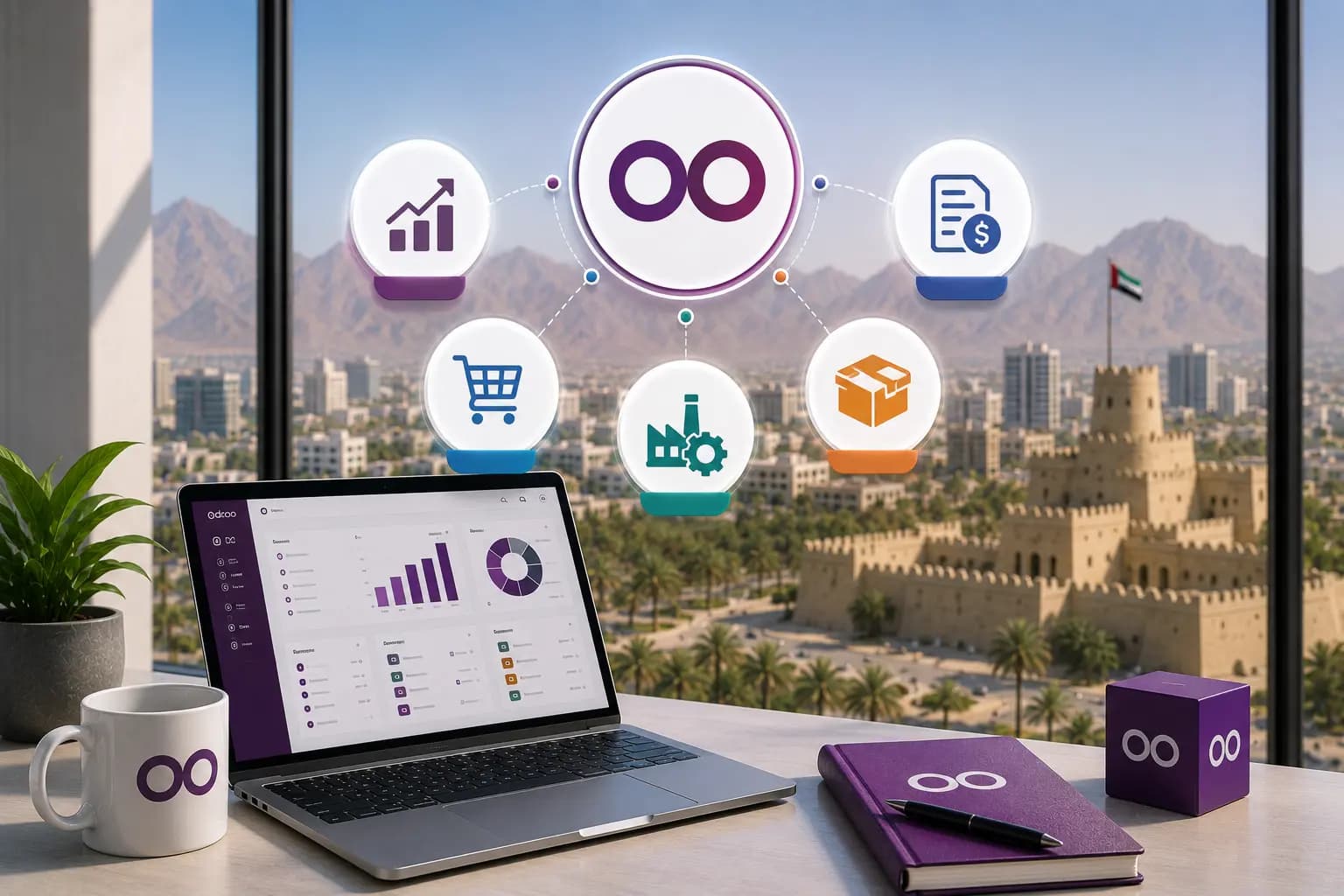
Umm Al Quwain has a business character that is easy to miss from outside. It is quieter than Dubai, less crowded than Sharjah, and still close enough to both for trading, distribution, retail, and manufacturing companies that need access without the heavier commercial pressure.
UAQ Free Trade Zone offers startups and SMEs more than 1,500 business options and licensing categories covering commercial, consultancy, freelance, industrial and service activities. It is possible because of road links to Dubai, Sharjah and Abu Dhabi, plus proximity to international airports, which explains why logistics, warehousing and trading businesses look at UAQ seriously.
This is where ERPNext enters. A five-person business can live on Excel for a while. But the shift comes when the owner wants one trusted version of stock, sales, collections and VAT. ERPNext gives UAQ SMEs structure without pushing them into an oversized system.
Why ERPNext Fits SMEs in UAQ Specifically
Cost is the obvious starting point. ERPNext is a free and open-source ERP system, so the licensing model starts from a different place compared with many traditional ERP products. A business still budgets for implementation, hosting, training, migration and support, but it avoids a large per-user fee just to use the core software.
UAE localization is the second reason. ERPNext includes UAE VAT-related setup, including default tax templates for 5 percent VAT, zero-rated, exempt supplies and excise categories. It also has the UAE VAT 201 report. The software helps SMEs keep their TRN, tax period and VAT treatment ready before setup.
ERPNext also fits common UAQ sectors. Trading companies need sales, purchases, inventory, accounts and VAT in one place. Similarly, manufacturers need BOMs, work orders, stock movement and costing. Besides, logistics firms need item tracking, delivery notes and billing. Retail companies need POS, inventory, customer records and accounts that connect to each other. So, the aim is simple - activate the modules used every week, then expand when the team is ready.
Pre-Implementation Checklist
Before creating the company in ERPNext, you need to map how work happens now. Not the neat version from a meeting. It requires the real version. Make sure who approves a purchase? Who creates the invoice?Which warehouse receives goods? Who edits prices? Small companies often keep these rules in people’s heads, which feels fast until the business grows.
Talk to an ERPNext Expert
Get personalized guidance on ERPNext implementation, customization, migration, and UAE e-invoicing. Our certified consultants will recommend the best solution for your business.
Then choose hosting. Cloud hosting suits SMEs that want a managed route. Self-hosting is for companies that want more control and have someone who can maintain the environment.
You must keep VAT details like TRN, legal company name, VAT filing period, tax categories, zero-rated or exempt sales, import handling, export documentation, and invoice format ready early.
A Step-by-Step Setup Process
You can generally start with the company master. Add the legal business name, address, default currency, fiscal year, and chart of accounts. For a UAE business, the chart of accounts should support VAT input, VAT output, receivables, payables, stock accounts, cost of goods sold, and expense categories. ERPNext can create standard structures, but SMEs should review the chart with their accountant because a careless chart can turn into a confusing Profit and Loss report later.
Next, configure modules based on daily work. For trading, begin with Sales, Purchase, Stock, and Accounting. When it comes to manufacturing-related work, add BOMs and work orders. Simultaneously, you need to focus on warehouse locations, delivery notes, shipment charges, and billing for logistics or distribution companies.
VAT configuration comes after that. Set up tax accounts, sales taxes and charges templates, purchase tax templates, item tax templates and customer or supplier tax categories where needed. Test standard-rated, zero-rated and exempt transactions separately. The finance team should also check if invoices show the right business details, TRN, tax amount and totals.
Data migration deserves patience. Excel data usually carries old item names, duplicate customers, inactive suppliers, and stock quantities that need checking. Data from another software can be migrated, but it should be cleaned first. Bring opening balances, ledgers, item masters, stock balances, and unpaid invoices. A new ERP works better when it starts with clean and useful history.
Schedule a Live ERPNext Demo
Experience ERPNext in action with a tailored demo covering accounting, CRM, inventory, HR, payroll, manufacturing, and business automation.
Testing before go-live should use real examples. Create a sale, purchase, return, payment, stock transfer, manufacturing entry, and VAT report. Let the actual users test. The warehouse user will notice things that someone else misses. The accountant will catch tax details others skip.
ROI Considerations
ERPNext ROI in UAQ usually comes from plain improvements that rarely look dramatic on a brochure. There are multiple things like faster invoicing, cleaner stock counts, less retyping, better purchase planning, fewer missed receivables, and quicker VAT preparation. Owners also get visibility without asking people for multiple reports.
The return is also managerial. When the same system holds sales, stock, and accounts, decisions become calmer. A business owner can see which items move, which customers delay payment, and which expenses keep rising quietly. That clarity saves time, and time is the one thing SME owners never have enough of.
Choosing an Implementation Partner in UAQ
Always choose an ERPNext implementation partner who understands local accounting, VAT, invoice formats, and SME behavior. Certifications and technical skill matter, but listen to the questions they ask. A serious partner will ask about workflows, approvals, stock valuation, tax treatment, reporting, and user habits before touching the setup screen.
For UAQ businesses, the partner should also understand free zone companies, mainland dealings, import-export paperwork, multi-currency trading, warehouse operations, and small-team realities. Remember, support after go-live matters a lot because the first month reveals the details people often forgot during meetings.
ERPNext e-invoicing enables businesses to automate invoice creation, validation, and compliance while integrating finance, inventory, and sales. As a powerful e-invoice software, ERPNext helps UAE businesses streamline billing, reduce manual errors, improve operational efficiency, and stay prepared for FTA e-invoicing requirements with a centralized ERP platform.
Conclusion
Setting up ERPNext for an SME in Umm Al Quwain should feel practical. It’s more like putting labels on shelves, cleaning the accounts drawer, and agreeing who is responsible for what.
ERPNext fits UAQ because it respects the way many SMEs operate - lean teams, careful budgets, cross-emirate trade, VAT responsibilities, and systems that can grow without becoming heavy.
Frequently Asked Questions
Why should I choose an Official ERPNext Partner in Umm Al Quwain?
An Official ERPNext Partner offers certified implementation, customization, migration, training, and ongoing support. Partnering with Penieltech ensures your ERPNext deployment follows best practices, minimizes implementation risks, and delivers long-term business value.
Is ERPNext suitable for small and medium-sized businesses in Umm Al Quwain?
Yes. ERPNext is ideal for SMEs as well as growing enterprises. It integrates accounting, CRM, inventory, HR, payroll, manufacturing, purchasing, and sales into one platform, helping businesses improve productivity and reduce operational costs.
Does ERPNext support UAE VAT and upcoming e-invoicing requirements?
Yes. ERPNext can be configured for UAE VAT compliance and can be adapted to support the UAE's evolving e-invoicing framework. It helps businesses automate invoicing, tax calculations, financial reporting, and compliance processes.
Get a Custom ERPNext Quote
Receive a detailed proposal for ERPNext implementation, cloud deployment, integrations, training, and ongoing support based on your business requirements.
How long does an ERPNext implementation take?
Implementation timelines vary depending on your business size, number of users, modules, data migration, and customization needs. A standard implementation may take a few weeks, while larger or more complex projects can take several months.
What ERPNext services does Penieltech provide in Umm Al Quwain?
Penieltech provides ERPNext consulting, implementation, customization, cloud deployment, data migration, third-party integrations, user training, annual maintenance, and technical support to help businesses maximize their ERP investment.
Related Articles
Explore more insights, ideas, and practical knowledge from our latest writings.